News
Germany Bans Flower from Reimbursement and Mandates Six-Month Trial for Extracts
Germany has voted to ban medical cannabis flower from its statutory health insurance scheme.
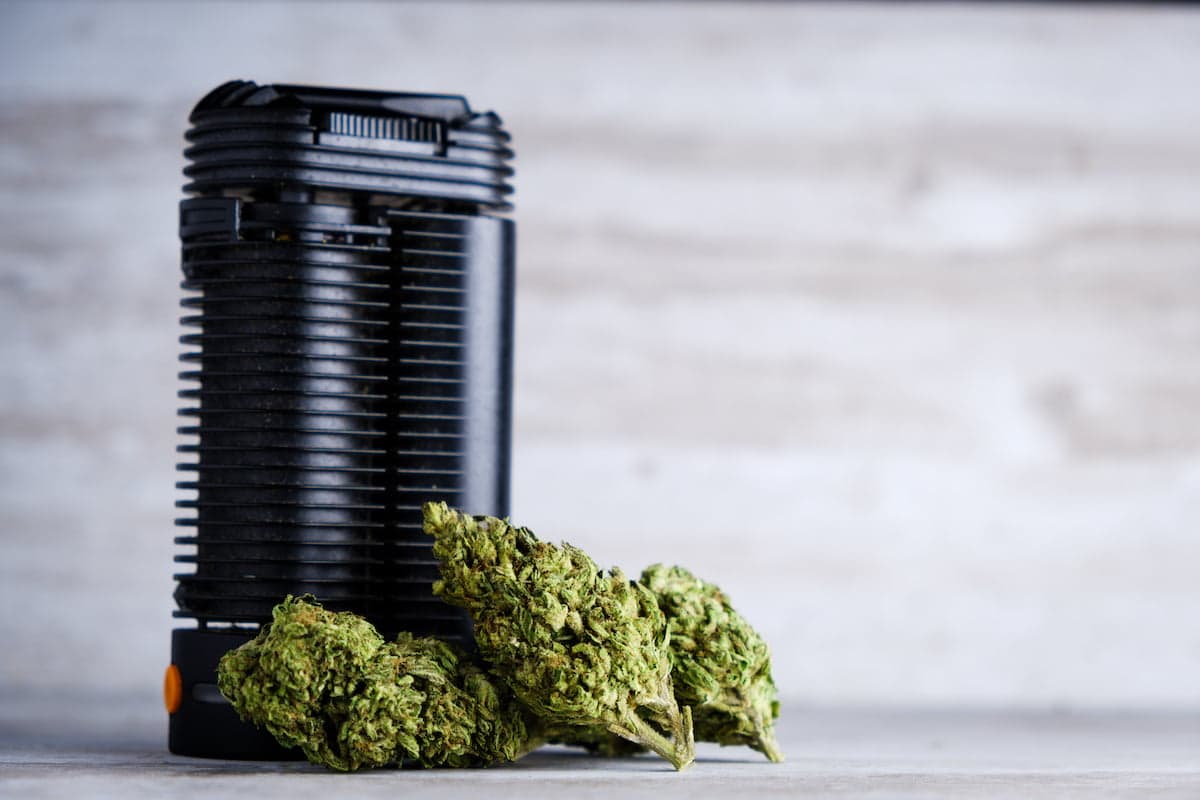
Germany has voted to ban medical cannabis flower from its statutory health insurance scheme, in a controversial move critics say will have an outsized impact on the ‘seriously ill’.
Provisions embedded in a broad health insurance savings package, the GKV-Beitragssatzstabilisierungsgesetz, passed through the Bundestag on 10 July 10, will mean medical cannabis flower is no longer reimbursed, while patients seeking extract cover must first undergo a mandatory six-month course of an approved cannabis-based finished medicine.
Passed with the aim of saving costs for insurers, industry associations and medical professionals say it will ultimately raise costs, while leaving patients mid-treatment without protection, and likely pushing many back to the illicit market.
Writing on LinkedIn, Dr Christiane Neubaur, Managing Director of the Verband der Cannabis versorgenden Apotheken (VCA), said: “Many patients who receive cannabis prescription medicines today do not fall into these approved indications. A blanket six-month priority for finished medicinal products can therefore create considerable access barriers if there is no suitably authorised finished medicinal product for the specific indication.”
What happened?
The GKV-Beitragssatzstabilisierungsgesetz is primarily a broad savings package for Germany’s statutory health insurance system, the GKV, which covers approximately 90% of the population. Cannabis appears in one clause, the amendment to §31 Abs. 6 of the Social Code Book V (SGB V), which defines what the GKV must reimburse.
The previous version of that provision gave patients with a serious illness the right to cannabis in the form of both flowers and extracts, as well as the pharmaceutical ingredients dronabinol and nabilon, subject to conditions. The new §31(6) simply removes flowers. There is no replacement provision and no transition arrangement for patients already in stable treatment.
What does remain, namely extracts and dronabinol, has now also become harder for patients to access. The amended provision states that before any extract claim is valid under GKV, the treating physician must first prescribe an approved cannabis-containing finished medicine for a six-month therapeutic trial.
Only if that trial is completed, or if the statutory conditions for bypass are met, can a patient access extract reimbursement. The conditions for entitlement are otherwise unchanged. Patients must have a serious illness where standard treatment is unavailable or unsuitable, and there must be a meaningful prospect of benefit.
The six-month gateway was not part of the government’s original bill. The cabinet draft (BT-Drucksache 21/6130) removed flowers but said nothing about a finished-medicine precedence rule. That provision appeared in a coalition Änderungsantrag, an amendment tabled by the governing parties in the Gesundheitsausschuss, and was incorporated into the committee’s final recommendation (BT-Drucksache 21/7016) on 8 July, two days before the Bundestag vote.
The four finished medicines against which the six-month trial must be run are currently:
- Sativex, approved for spasticity in multiple sclerosis
- Epidyolex, approved for certain severe forms of epilepsy
- Canemes, approved for chemotherapy-related nausea and vomiting
- Exilby, a full-spectrum extract developed by Vertanical and approved in June 2026 for chronic back pain, though still in price negotiations with the Federal Joint Committee and not yet listed on the reimbursed market.
Prescribing any of those four products outside their approved indication constitutes an off-label use, requiring separate clinical justification and individual GKV approval. For the majority of cannabis patients, whose conditions do not match those four specific labels, the practical route to compliant reimbursement under the new rules runs through a mandatory trial of a medicine they are not technically approved for.
A savings law that may cost more
Industry opposition was swift and targeted the policy’s economic logic directly. Michael Greif, Managing Director of the Bundesverband Cannabis Wirtschaft (BvCW), said the reform ‘completely misses its actual objective.’
“The costs for health insurers will likely rise rather than fall, because individual compounded preparations are often more economical than expensive finished medicines. At the same time, physicians’ therapeutic autonomy in the medical cannabis field is massively curtailed,” he explained.
The BfArM’s national survey of GKV cannabis prescriptions found that 76.4% of patients cited chronic pain as their primary condition, a cohort for whom only Exilby carries an approved indication, and that drug is not yet on the reimbursed market.
Most of those patients would face a mandatory trial of a product prescribed off-label, a route requiring separate clinical justification and individual GKV approval, and typically higher cost.
Kathrin Konyen, Medical Cannabis Sector Lead at the BvCW, said the absence of any transition protection for patients already mid-treatment deepens the concern: “A blanket priority for finished medicines forces doctors into rigid therapy schemes, creates additional bureaucracy and endangers treatment success.
“Therapy decisions must be oriented to individual medical needs – not blanket requirements. A priority would only be medically sensible if, for the specific illness, an approved and available preparation exists and no medical objections apply.”
GKV expenditure on medical cannabis totalled approximately €205 million in 2025, covering flowers and extracts combined, according to GKV Gamsi quarterly data cited by the BvCW. That figure sits against a projected structural GKV funding gap of up to €40 billion by 2030, making cannabis a marginal line in the savings calculus, while risking cost substitution upwards through higher-priced finished medicines.
Antonia Menzel, Chairwoman of the Bundesverband pharmazeutischer Cannabinoidunternehmen (BPC), told Krautinvest the arithmetic does not support the stated goal. “This amendment doesn’t save a single euro; on the contrary. It forces doctors to prescribe preparations for six months that can be more expensive per treatment month than the tried-and-tested formula and are not even approved for most medical conditions. This is completely out of place in a law intended to stabilise contribution rates.”
What happens next
The legislation is classified as nicht zustimmungspflichtig, and does not require Bundesrat consent to take effect. Germany’s upper chamber can, however, refer it to a mediation committee (Vermittlungsausschuss), a process that could delay implementation and reopen the cannabis provisions for revision.
The BvCW has written to the Länder urging them to take that route, with three specific demands. These include abolition or significant shortening of the six-month mandatory trial, statutory exemption clauses covering contraindications, intolerances, and unsuitable dosage forms, and a legal transition arrangement for patients currently in established cannabis therapies.
The outcome of Vertanical’s ongoing price negotiations with the Federal Joint Committee will also be closely watched. Until a reimbursed price for Exilby is agreed, the approved gateway for the majority of chronic pain patients, the largest single diagnosis cohort, remains open in law but closed in practice.
Get the weekly briefing
A round-up of the latest science, regulation and developments across the UK and Europe — in your inbox every week.