Medical cannabis
Curaleaf Laboratories launches first certified liquid medical cannabis inhaler for UK patients
What is the Curaleaf Que device, how does it work and how does it differ from a dry-herb vaporiser? Curaleaf Laboratories, part of Curaleaf International, announced the UK launch of […]
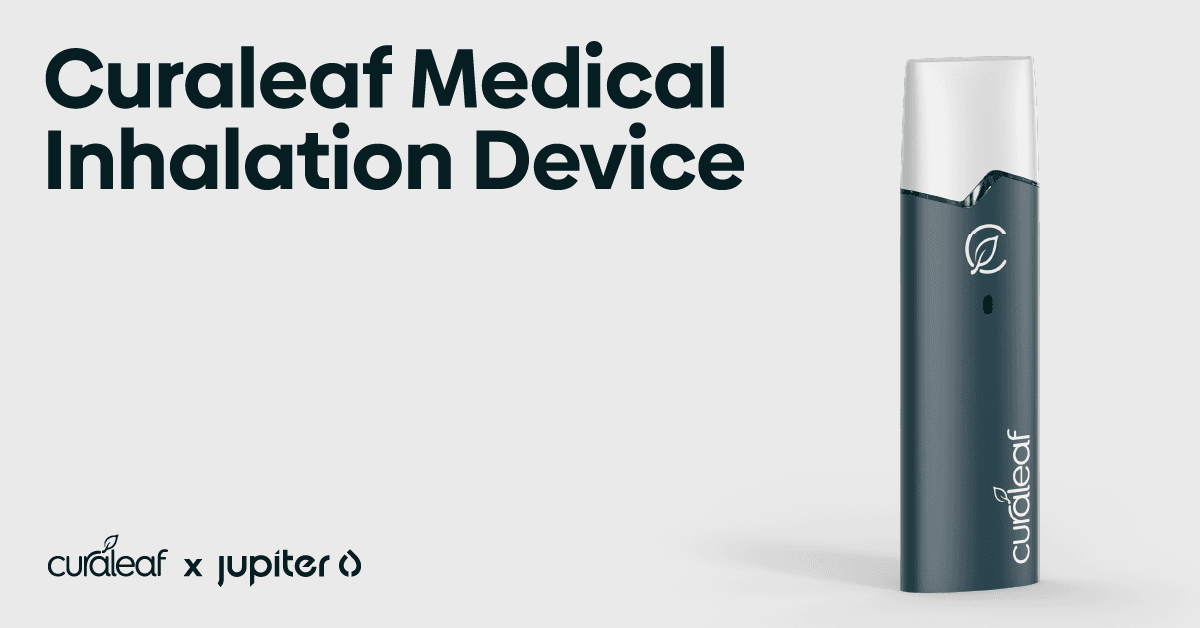
What is the Curaleaf Que device, how does it work and how does it differ from a dry-herb vaporiser?
Curaleaf Laboratories, part of Curaleaf International, announced the UK launch of the Curaleaf Que Medical Inhalation Device (QMID) in September 2025.
The company described it as the first CE-certified liquid inhaler for cannabis-based medicines.
The prescription device uses liquid cannabis extract cartridges and activates when the patient inhales.
Since the law changed in the UK in 2018, allowing specialist doctors to prescribe cannabis-based products for medicinal use (CBPMs), more than 60,000 patients have gained access.
Among this growing population, one of the biggest unmet needs has been a discreet and reliable inhalation option – addressed with the launch of the Curaleaf Que Medical Inhalation Device.
Patients were also seeking greater choice in how they take their medicines, and Curaleaf Laboratories responded with an expanded range that now includes oils, dried flower, pastilles, capsules, topicals, and vaporisation options.
In parallel, Curaleaf is working with regulatory bodies in markets including Germany, Poland, Australia, and others to secure registration of the device and expand patient access wherever permitted.
The EU Class IIa device, according to the EU Medical Device Regulation (EU 2017/745), enables consistent, controlled delivery of liquid cannabis extracts, offering a new and approved option for eligible patients who are appropriate for inhaled cannabis medicines.
The new device has been tested and certified for safety, reliability, and repeatability across multiple use cases required for medical certification.
Jonathan Hodgson, UK Managing Director at Curaleaf International, commented: “For the first time, inhaled liquid cannabis can be administered with controlled precision through a registered handheld device – giving prescribers and patients new confidence in treatment delivery. Unlike unregulated or consumer-grade vaporisers, this device is purpose-built for clinical use, with standardised delivery, medical-grade components, and compatibility with formulations that meet European Pharmacopoeia standards.”
The Curaleaf Que Medical Inhalation Device, designed in partnership with Jupiter Research LLC, a subsidiary of TILT Holdings, developed and based on Jupiter’s intellectual property, is a purpose-built medical device. Key features include:
- CE-certified and Class IIa approved
The device is certified for its intended medical use. This certification does not establish how effectively the cannabis medicine treats a particular condition.. - Precise, standardised timed dosing
The quantity of medication delivered by the device and cartridge has been measured using internationally recognised criteria. This ensures reliable delivery across all administrations and devices — critical for consistent patient administration. - Designed for real patients
The device activates on inhalation, with no buttons or menus. It’s simple to use, discreet, and well-suited for both clinical supervision and home use. - Reusable, long-lasting hardware
Rechargeable, with a minimum lifespan of 6 months from first use, the replaceable 0.5 mL and 1.0 mL cartridges deliver up to 240 inhalations with the 1.0mL cartridge.
The device is only compatible with Curaleaf’s EU-GMP liquid extract cartridges, available to all medical cannabis clinics.
How Does the Curaleaf Que Compare With a Dry-Herb Vaporiser?
The Curaleaf Que uses liquid cannabis extract, while a dry-herb vaporiser heats prescribed cannabis flower.
| Feature | Curaleaf Que device | Dry-herb vaporiser |
|---|---|---|
| Medicine used | Compatible Curaleaf liquid extract cartridges | Prescribed dried cannabis flower |
| Preparation | Insert a filled cartridge | Prepare and load flower into the chamber |
| Activation | Activates when the patient inhales | Controls vary by model |
| Reuse | Rechargeable hardware with replaceable cartridges | Reusable device requiring cleaning and maintenance |
| Compatibility | Designed for corresponding Curaleaf cartridges | Designed for dried flower |
Patients should use the device and medicine specified by their prescribing team. Oils prescribed for swallowing or use under the tongue should not be put into an inhaler.
Read our complete UK guide to medical cannabis vaporisers for more on the different formats.
Juan Martinez, International CEO at Curaleaf, said: “The launch of this certified Curaleaf device reflects the next phase of innovation and positions Curaleaf at the forefront of a differentiated, pharma-grade delivery platform that addresses growing global demand for precision cannabis therapies. It’s part of our wider mission to make medical cannabis more accessible, more consistent, and integrated into mainstream healthcare systems.”
Curaleaf International continues to collaborate with regulators, healthcare providers, and pharmacists across the globe to expand safe access to cannabinoid-based medicines in line with evolving clinical guidelines.
New analysis has found that NHS access to medical cannabis could boost the UK’s economy by £13.3 billion over the next decade by returning thousands back to work.
Widening NHS access to medical cannabis could add £4.5 billion to the economy over five years, and £13.3 billion over a decade, according to an economic analysis by the Centre for Economics and Business Research (Cebr).
The research, commissioned by Curaleaf Clinic, also suggests NHS access could help thousands of people with long-term health conditions return to work, while reducing hospital admissions for those eligible by 28% a year.
Since its legalisation in 2018, private prescriptions for cannabis-based medicines have already contributed around £283 million in Gross Value Added (GVA) by helping people get well and back to work.
Roughly 2.8 million people in the UK are currently locked out of employment due to long-term illness2. Polling3 conducted alongside the Cebr study, found 62% of those who have been out of work and prescribed medication believe they have exhausted all traditional treatment options.
Those behind the research say the findings reveal a missed opportunity to improve lives, relieve pressure on the NHS, and support the government’s five-year plan to get more people working.
“Our analysis shows that appropriately prescribed medical cannabis can help people with chronic conditions return to work,” commented Pushpin Singh, Managing Economist at the Centre for Economics and Business Research.
“Expanding NHS access would benefit patients while delivering significant productivity gains and cost savings to the UK economy.”
READ MORE: Economic analysis finds medical cannabis could save NHS £4 billion each year
Out of work and out of options
Many people who have experienced unemployment due to long-term illness are frustrated with traditional medications. In total, 55% who have been prescribed medication report they provide little relief and 48% say they negatively affect their quality of life.
Being excluded from the workforce also takes a heavy emotional toll. Over half report a loss of self-esteem (56%) and declining confidence (52%), while 46% feel helpless. Mental health is also affected, with 47% saying unemployment has harmed their wellbeing and 39% experiencing feelings of embarrassment.
Fatma Mehmet, a patient at Curaleaf Clinic, says medical cannabis has helped her regain her independence.
“Living with chronic pain took a huge toll on my physical and mental health. As someone independent and career-driven, not being able to get out of bed and go to work made me feel as if my identity was being stripped away,” she says.
“When I felt like I was at rock bottom and out of options, I discovered medical cannabis. I now have the ability to work, lead a team, and regain my independence. Expanding medical cannabis via the NHS would mean greater choice for more people, which can only be a good thing.”
A roadmap towards improving access
However, there is interest in medical cannabis as an alternative therapy with nearly half (44%) who have not previously been prescribed it saying they would consider trying it if it were more widely available on the NHS.
Nearly two-thirds of UK adults (64%) believe people with chronic ill-health should have more treatment options to get back to work, while 71% of those directly affected say medical cannabis should be made more widely available if it can help.
But 40% of those who have struggled with employment due to a diagnosed long-term health condition are still unaware that medical cannabis is a legally available treatment in the UK, and 33% describe the current system as confusing, inaccessible or unclear.
“As a doctor, I see daily how chronic illness doesn’t just affect someone’s health – it removes them from the workforce, creates economic hardship, and leads to a cascade of social and psychological problems that can worsen the cycle of ill health,” says Dr Simon Erridge, Director of Research at Curaleaf Clinic.
“This analysis shows that medical cannabis isn’t just a health issue – it’s an economic one too. Our goal is to give people affected by poor health more choice and control in their treatment, helping them build independence and, where appropriate, re-enter the workplace. This report highlights a way forward.
“We urgently need a roadmap towards improving access to medical cannabis via the NHS for suitable patients, with the required investment in essential research to deliver this.”
Get the weekly briefing
A round-up of the latest science, regulation and developments across the UK and Europe — in your inbox every week.