Cannabis explained
Medical Cannabis for ADHD in the UK: How It Compares With Stimulants
Ask any UK cannabis clinic which conditions bring people through the door, and ADHD will reliably be near the top of the list. Despite this demand, the published literature on […]
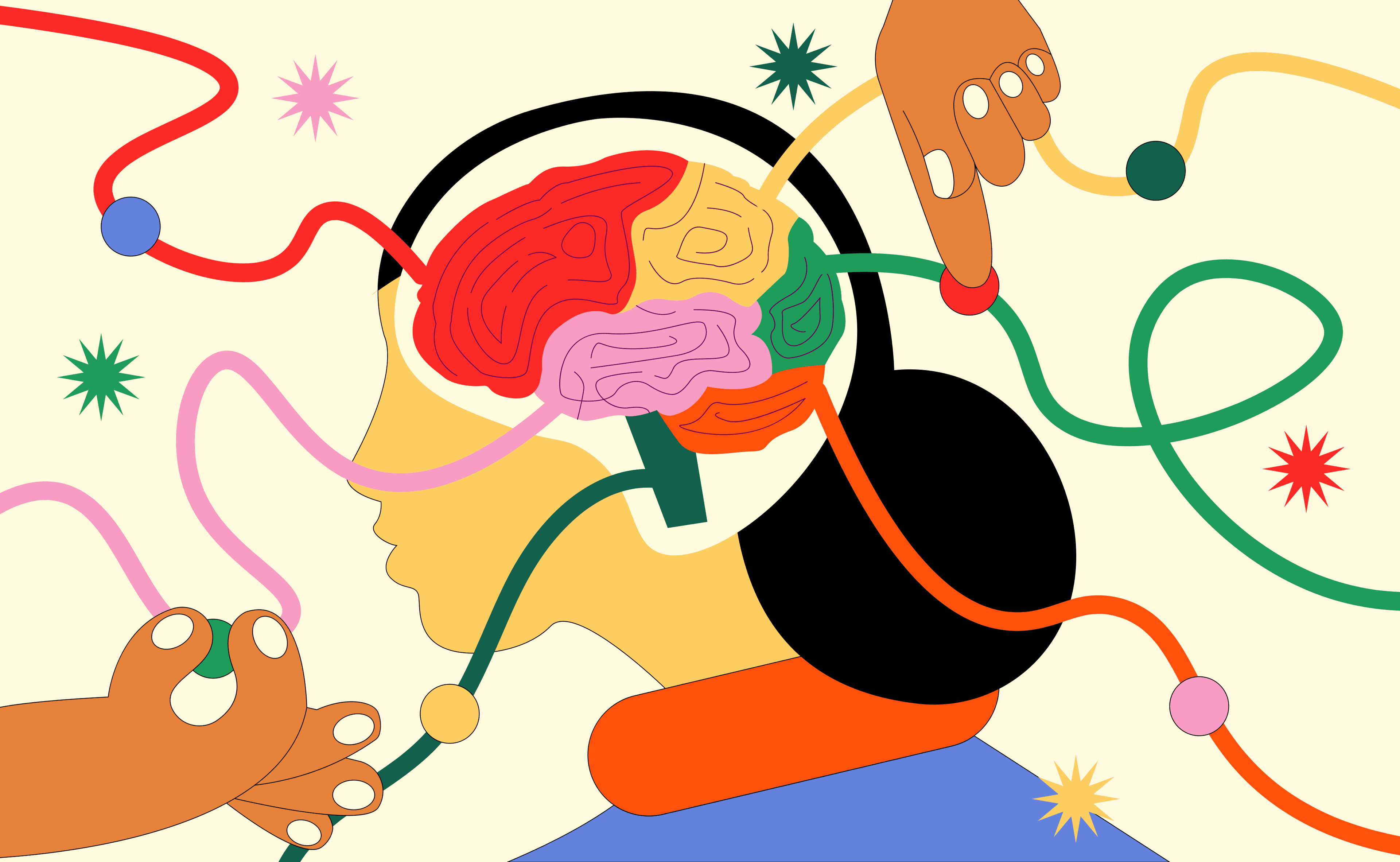
Ask any UK cannabis clinic which conditions bring people through the door, and ADHD will reliably be near the top of the list.
Despite this demand, the published literature on what cannabis does for ADHD is strikingly thin. Currently, there is only one small randomised trial that missed its primary endpoint, a single uncontrolled case series, and a large volume of self-report.
Stimulant medication, by contrast, has decades of controlled trials behind it. That imbalance is the starting point for any meaningful comparison, but the reason why so many patients are asking about cannabis lies elsewhere.
Why the question keeps coming up
Demand for ADHD assessment has surged. NHS England’s first national ADHD dataset recorded around 20,000 new assessment referrals in March 2025 alone, up 13.5% on the year before, and by early 2026 estimated that hundreds of thousands of people, by some measures more than 700,000, were waiting for an assessment in England.
The independent ADHD Taskforce found referral demand had roughly tripled in the three years to 2023 while assessment capacity barely moved.
The medication shortage that dominated 2023–24 has since eased, and is no longer the main reason people look elsewhere. What has not eased is the backlog, and here the data is thinner than the headline numbers suggest.
Robust national figures on how long adults wait barely exist, the Taskforce noted that adult waiting times are not systematically collected, and relied on a survey of commissioners, clinicians and patients in which 40% reported waits of two years or more, with reports of 10–15 years in some areas, evidence it graded as low quality.
Treatment is the sharper gap. Randomised trials indicate that 70–90% of patients benefit from ADHD medication, yet in one national adult survey only 2.6% of those screening positive for ADHD were recorded as receiving it, and only around one in six children moved successfully into adult services. On the Taskforce’s reading, England is not over-medicating ADHD but substantially under-treating it.
This is the dynamic which is increasingly driving patients towards cannabis.
How do stimulants actually work for ADHD?
Methylphenidate and lisdexamfetamine are first-line for adult ADHD, and the evidence behind them is among the stronger bases in psychiatry. They increase the availability of dopamine and noradrenaline in the brain regions governing attention and impulse control. Response is usually fast and measurable, and the 70–90% benefit figure above comes from randomised controlled trials, not observation.
The side effects are similarly well documented, including appetite suppression, disrupted sleep, raised heart rate and blood pressure.
A meaningful minority of patients tolerate them poorly or find the trade-off not worth it. They are Schedule 2 controlled drugs, which brings prescribing restrictions, monitoring requirements and – as recent years demonstrated – exposure to supply shocks.
However, being the medical standard does not necessarily mean they are universally suitable. On the same trial evidence, somewhere between one and three patients in ten will not get an adequate response, and others stop because the side effects are not worth the benefit.
Cannabis ≠ Stimulants
It’s important to clarify here that cannabis should is far from the only alternative available to stimulants for those who find they hinder more than help.
Atomoxetine and guanfacine are licensed, NHS-funded, non-stimulant ADHD medications. Atomoxetine is a noradrenaline reuptake inhibitor; guanfacine is an alpha-2A agonist.
Neither is a controlled drug. As the ADHD Taskforce put it, non-stimulant medications “are also effective but not first line because effect sizes are not as large as those for prescription stimulants.”
For those exploring alternatives, this is likely the route a patient must have exhausted before cannabis is prescribable at all. Any comparison that jumps from stimulants straight to cannabis has skipped the rung of the ladder that most patients should reach for first.
What the cannabis evidence actually shows
One randomised trial
The EMA-C trial (Cooper et al., 2017) randomised 30 adults to Sativex, a 1:1 THC:CBD oromucosal spray, or placebo over six weeks. Its primary outcome — cognitive performance and activity level on the QbTest — was not met on intention-to-treat analysis (estimate −0.17, 95% CI −0.40 to 0.07, p=0.16). Secondary outcomes showed nominally significant improvement in hyperactivity/impulsivity (p=0.03) and a cognitive measure of inhibition (p=0.05), with trends for inattention (p=0.10) and emotional lability (p=0.11). None survived adjustment for multiple comparisons. The authors described it as a pilot study justifying larger trials, which is what it is. Nine years on, those larger trials have not reported.
UK case series
The most cited UK evidence is Ittiphakorn et al. (2023) in Neuropsychopharmacology Reports, drawing on the UK Medical Cannabis Registry: 68 patients with a primary ADHD diagnosis, followed to 12 months. It found improvements in anxiety (GAD-7) and sleep quality at 1, 3, 6 and 12 months, and in health-related quality of life (EQ-5D-5L) at 1, 3 and 6 months — but not at 12. Sixty-one adverse events were recorded by 11 participants (16.2%), mostly moderate. Concomitant ADHD medication fell, with reductions of 38.5% in lisdexamfetamine, 15% in methylphenidate and 14.3% in dexamfetamine.
Three things about that study are important to take into account.
First, it did not measure ADHD symptoms. Its outcome measures were quality of life, anxiety and sleep. No ASRS, no CAARS, no ADHD rating scale of any kind. It is therefore not evidence about core ADHD symptoms even descriptively.
Second, the cohort was narrow: 80.9% male, with a mean age of 25.6.
Third, and most consequentially, cannabis exposure was quantified in “cannabis gram-years” for current and former users, because a substantial share of the cohort was already using cannabis before enrolling. That single design fact complicates every improvement the study reports, for reasons covered below.
Wider literature
Reviews of cannabis and ADHD consistently land in the same place: a well-established relationship between cannabis use frequency, ADHD symptom severity and cannabis use disorder risk, and an unclear, understudied effect of cannabis on symptoms themselves.
Where individual studies report benefit for concentration, motivation or impulsivity, others find impairment of executive function and memory.
In December 2024 the Canadian ADHD Resource Alliance (CADDRA) issued a position statement concluding that there is no evidence cannabis is an effective ADHD treatment or that it improves attention.
It is also worth noting that the ADHD Taskforce’s two-part review, the most comprehensive assessment of ADHD care in England to date, does not mention cannabis once.
Cannabis and the ADHD brain
Stimulants work by increasing dopamine availability. ADHD is associated with altered dopamine signalling.
Cannabis, on the current neuroimaging evidence, appears to move that dial in the opposite direction. Chronic use has been associated with reduced dopamine synthesis capacity in the striatum.
The endocannabinoid system interacts with attention and arousal by routes that have nothing to do with dopamine synthesis, and reduced synthesis capacity in chronic users may be consequence rather than cause.
But it does mean the pharmacological story does not obviously favour cannabis for core ADHD symptoms, and any account that presents cannabis as a mechanistically natural fit for ADHD is running ahead of the evidence.
ADHD and cannabis use
People with ADHD are considerably more likely than the general population to develop cannabis use disorder.
A 2024 clinical-epidemiological meta-analysis put the risk at 2.85 times higher for a lifetime CUD diagnosis and 2.91 times higher for a current one, with lifetime prevalence of CUD in ADHD populations at 26.9% and current prevalence at 19.2%.
The prediction intervals were 12.4–48.8% and 5.5–39.1% respectively which suggests that the association is robust and that its size is poorly pinned down.
Furthermore, a large proportion of people reporting that cannabis helps their ADHD were using cannabis before any prescription, often daily. Cannabis withdrawal produces irritability, restlessness, poor sleep and difficulty concentrating, a symptom set that overlaps substantially with ADHD itself.
When a regular user moves onto a consistent, measured prescription, some of the improvement they report may be the relief of withdrawal rather than the treatment of ADHD.
That is not an argument that patients are mistaken about feeling better. It is an argument that “cannabis improved my ADHD symptoms” and “regular, reliable cannabis dosing stopped me cycling through withdrawal” can look identical in a self-report questionnaire and are clinically very different things. Only a controlled trial in cannabis-naive patients can separate them, and no such trial has been run.
Mitchell et al. (2016), in PLoS One, analysed 401 posts across 55 online forum threads: 25% described cannabis as therapeutic for ADHD, 8% as harmful, 5% as both, and 2% as having no effect. Those are counts of posts, not patients, from a self-selecting population discussing cannabis on cannabis-adjacent forums. The authors were explicit that it measures what people say online.
Cannabinoids other than THC
Patient interest in CBG, CBN and specific terpene profiles for ADHD has grown quickly, largely through community discussion rather than trials.
The evidence position here should be stated without hedging: there are no controlled trials of CBG, CBN or isolated terpenes for ADHD in humans.
CBG is a highly potent alpha-2 adrenoceptor agonist, Cascio et al. (2010) reported sub-nanomolar potency in the British Journal of Pharmacology, and guanfacine, a licensed ADHD medication, acts at the alpha-2A subtype. A receptor target shared with an approved treatment is a reasonable thing to want tested.
However, a hypothesis derived from rodent membrane assays is not evidence of clinical benefit. Alpha-2 agonism is also associated with sedation.
Access, eligibility and cost
Stimulants and non-stimulants are NHS-prescribed and NHS-funded, so the cost to most patients is the standard prescription charge.
Long waits push many people toward private or Right to Choose assessment. Once a specialist has stabilised a dose, a GP can take over prescribing under a shared care agreement, making the medication NHS-funded, but shared care is discretionary.
The ADHD Taskforce found that shared care protocols, long available, “have become more problematic in recent years with many arrangements no longer in place,” citing insufficient GP time, lack of training and remuneration, concerns about diagnostic quality from some private providers, and unease about prescribing a controlled drug.
Its own case studies include a patient diagnosed via Right to Choose who responded well to medication and then could not get it, because her practice declined shared care. Patients in that position are often left with no choice but to fund private prescriptions themselves.
Cannabis has no NHS route for ADHD. NICE has not recommended cannabis-based products for ADHD, and NHS funding decisions cite the absence of cost-effectiveness evidence. Beyond funding, there are gates most coverage omits:
- It can only be prescribed by a clinician on the GMC Specialist Register — never a GP.
- In practice it is prescribed only after at least two conventional treatments have failed or proved intolerable, which for ADHD generally means a stimulant and a licensed non-stimulant.
- Most clinics route new patients through a multidisciplinary team review.
- It remains an unlicensed indication, prescribed at specialist discretion and carrying the additional responsibility that entails.
On cost, patients pay for assessment and every prescription, indefinitely. Prohibition Partners data puts the average UK price of medical cannabis flower at £7.05 per gram in 2026. Because consumption varies widely by patient and condition, per-gram pricing translates poorly into a monthly figure; across the UK market, typical monthly prescription costs run in the region of £150–£250, plus initial consultation fees of up to around £200 and follow-up appointments.
The market context has moved fast, and figures in circulation are often out of date. More than 40 private clinics now operate in the UK.
Estimates of patient numbers differ because they measure different things: research published in 2026 puts active patients at 60,000–75,000, while Prohibition Partners estimates that more than 140,000 people will be prescribed medical cannabis in the UK at some point during 2026, up from roughly 100,000 the year before.
Driving and work
Under section 5A of the Road Traffic Act 1988, driving with more than 2 micrograms of THC per litre of blood is an offence. Critically, the prosecution does not have to prove that driving was impaired, exceeding the limit is the offence.
Section 5A(3) provides a statutory medical defence where the drug was lawfully prescribed and taken in accordance with instructions. But it is a defence, not an exemption: it must be raised evidentially at court, it depends on the patient having followed directions and being fit to drive, and it does nothing to prevent a roadside stop, a blood test, arrest or charge in the first place. THC also remains detectable well after acute effects subside, which matters for safety-critical work and workplace testing. For a patient who drives for a living, this single consideration can outweigh every efficacy argument on either side.
Where this leaves the comparison
| Stimulants | Licensed non-stimulants | Medical cannabis | |
| Evidence base | Decades of RCTs; 70–90% benefit | RCTs; smaller effect sizes | 1 pilot RCT (missed primary endpoint); 1 uncontrolled case series (no ADHD scale) |
| Line of treatment | First | Second | Unlicensed; after ≥2 failed treatments |
| Prescriber | Specialist, then GP via shared care | Specialist, then GP | GMC Specialist Register only |
| Funding | NHS | NHS | Private only |
| Typical cost | Prescription charge | Prescription charge | ~£150–£250/month, indefinitely |
| Dependence risk | Controlled drug; misuse risk | Low | CUD risk ~2.9× in ADHD |
| Driving | No specific offence | No specific offence | Section 5A exposure; medical defence not automatic |
| Long-term safety data | Extensive | Good | Minimal in prescribed ADHD populations |
Stimulants remain first-line for defensible reasons: a strong evidence base, NHS funding, a well-understood safety profile. Licensed non-stimulants are the next step and are widely under-used.
Cannabis sits outside this pathway as an unlicensed option, privately funded, prescribed at specialist discretion where standard treatments have failed, with an evidence base that does not currently support claims of efficacy for core ADHD symptoms.
None of which means the patient reports should be dismissed. Anxiety and insomnia commonly sit alongside ADHD and stimulants can worsen both.
There are patients for whom a cannabis prescription appears to help, and the registry data on anxiety and sleep is consistent with that.
This debate, and much more, will be explored by the industry’s leading experts at the Cannabis Health Symposium in London on 26 November 2026 at Conway Hall.
This article is for general information and is not medical advice. Anyone considering treatment for ADHD should speak to a qualified clinician. Do not stop or change prescribed ADHD medication without medical supervision.
Source ledger
- Report of the independent ADHD Taskforce: Part 2, NHS England, November 2025 — waiting-time data availability, 40% survey figure, 10–15 year reports (graded low), 70–90% RCT benefit, 2.6% treatment rate, 1-in-6 transition rate, non-stimulant effect sizes, shared care breakdown, Case study 1.
- Cooper RE et al. (2017) ‘Cannabinoids in attention-deficit/hyperactivity disorder: a randomised-controlled trial’, European Neuropsychopharmacology — EMA-C trial.
- Ittiphakorn P et al. (2023) ‘UK Medical Cannabis Registry: an analysis of clinical outcomes of medicinal cannabis therapy for attention-deficit/hyperactivity disorder’, Neuropsychopharmacology Reports.
- CADDRA position statement, ‘Cannabis and ADHD’, December 2024.
- Clinical-epidemiological meta-analysis of CUD prevalence and risk in ADHD, Journal of Psychiatric Research, 2024.
- Mitchell JT et al. (2016) ‘”I Use Weed for My ADHD”: a qualitative analysis of online forum discussions on cannabis use and ADHD’, PLoS One.
- DHSC Medicine Supply Notifications / NHS England Serious Shortage Protocols, accessed August 2026 (corroborated via MediWatch tracker).
- Prohibition Partners UK market data, 2026 — flower pricing, patient number projection.
- Cannabis Industry Council research, 2026 — active patient estimate.
- Cascio MG et al. (2010) ‘Evidence that the plant cannabinoid cannabigerol is a highly potent α2-adrenoceptor agonist and moderately potent 5HT1A receptor antagonist’, British Journal of Pharmacology.
- Road Traffic Act 1988 s.5A and s.5A(3); CPS legal guidance, Road Traffic — Drink and Drug Driving.
- NICE NG87 (ADHD: diagnosis and management); NICE NG144 (cannabis-based medicinal products).
- Bloomfield MAP et al., neuroimaging evidence on cannabis use and striatal dopamine synthesis capacity.
Get the weekly briefing
A round-up of the latest science, regulation and developments across the UK and Europe — in your inbox every week.