News
Inside the Medical Cannabis Police Guidance: Everything Patients Need to Know
Last week, the first official guidance on medical cannabis for police officers in England and Wales was made public.
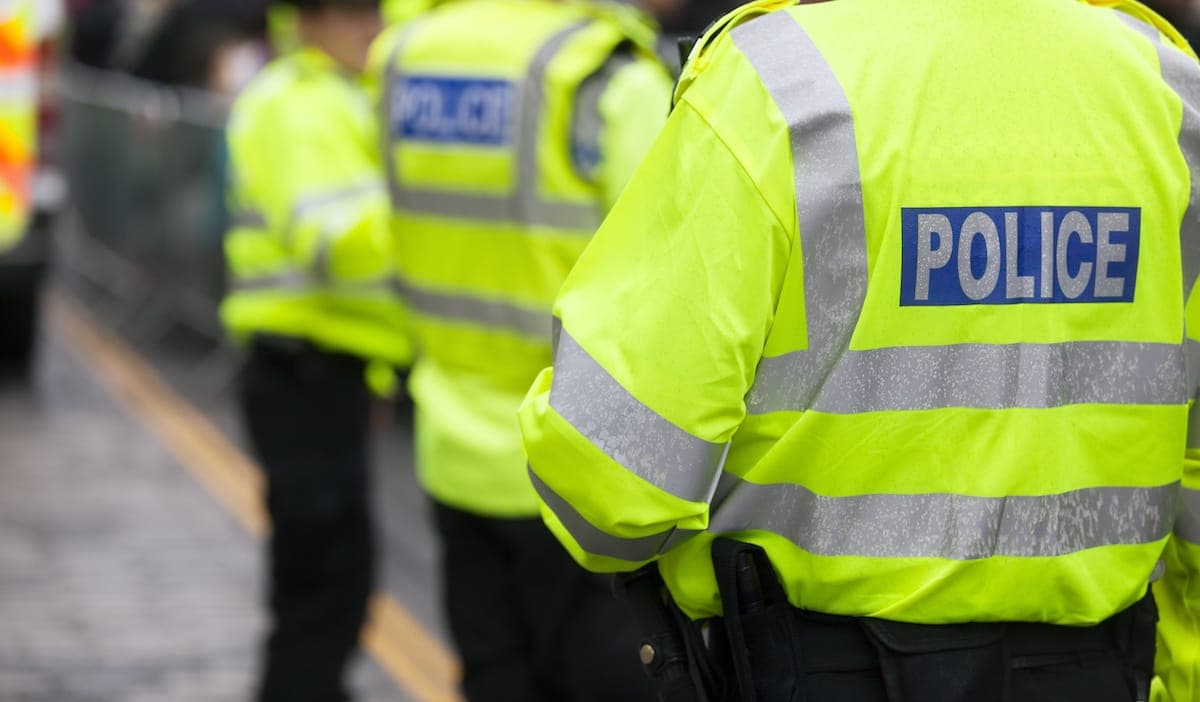
The 12-page document, titled ‘Medicinal Cannabis and the Police – Guidance for Officers and Staff,’ was approved by the National Police Chiefs’ Council in November 2024, meaning that it is now official police policy across all 43 forces in England and Wales.
Prepared by the Association of Police Controlled Drug Liaison Officers (APCDLO) the guidance aims to establish a ‘patients first, suspects second’ mindset among frontline police officers when dealing with medical cannabis prescriptions, helping provide clear protocols for encounters for the first time since treatment was legalised in 2018.
Cannabis Health has obtained the full guidance and spoken extensively with Richard List QPM, who authored the guidance, about its contents, limitations, and what comes next.
“I am very pleased that this guidance for the Police Service has been approved by the NPCC, and by the very positive response from both patients and the wider cannabis community. I am grateful to all who have contacted me.
“However, this guidance is only a start and the real challenge is to embed its principles into daily policing practice.
“Undoubtedly, the guidance will require new versions based upon joint learning and experience. It will be important to develop and maintain a positive and open dialogue to ensure that this happens effectively and successfully. I very much look forward to working with all involved in the future.” (Richard List QPM)
Core protocols
When encountering someone who states they are in lawful possession of medical cannabis, officers are instructed to follow this protocol:
Ask to see the original packaging in which the cannabis is provided.
Look for the dispensing label, as ‘this contains important information about the medicine and the patient to whom it is prescribed.’
Request a letter from their prescriber or a copy of their original prescription – though the guidance explicitly notes ‘there is no legal requirement to possess these documents.’
If they have a letter, this should include the patient’s details (including name and address), as well as the prescribing doctor’s name and contact details.
The person should be able to present identification to verify these documents.
If no packaging, labelling or other documentation is available, the guidance suggests that ‘officers consider further enquiries with health care partners. This could mean contacting the prescriber or cannabis clinic.’
Crucially, the guidance states: “Further police action should only follow if the officer has justifiable grounds for believing that the individual is NOT a patient who has lawfully been prescribed medicinal cannabis.”
The document also emphasises that ‘this can only ever be general advice’ and acknowledges the complexity officers face.
“Please remember that people in lawful possession of medicinal cannabis are patients. They are very likely to be suffering from chronic pain and/or other serious ailments. Medicinal cannabis will only be prescribed to an individual when other medicines and treatments have not been effective.”
The guidance also clarifies a critical legal distinction that has caused confusion: “Just like any other controlled drug, no offence is committed if a patient who has been lawfully prescribed a CBPM has it in their possession.”
‘Unlicensed does not mean unlawful’

One of the most critical clarifications in the guidance addresses a common source of confusion, namely the distinction between licensed and unlicensed medicines.
Only a fraction of the medical cannabis prescribed in the UK (around five patients) is classified as licenced medicine, including epilepsy treatments like Epidyolex.
As the guidance clarified, ‘almost exclusively, the CBPMs that police encounter are private prescriptions which are unlicensed.’
It defines unlicensed medicine as one that ‘has not received what is known as “market authorisation”. It is not officially approved for treating a patient’s particular condition, but a doctor can prescribe it if they feel it will provide a safe and effective treatment. This is a relatively common medical practice.’
Critically, it states: ‘The key point to note as far as this guidance is concerned, is that unlicensed does not mean unlawful.’
Cancards and patient ID

Cancards were launched in 2020 as a scheme to help medical cannabis patients avoid confrontation with police. For an annual fee of £30, cardholders receive a plastic card indicating they have a qualifying medical condition that could be treated with cannabis, verified through medical records.
The cards were endorsed by several senior police officers and positioned as a way to give patients confidence when carrying cannabis, particularly relevant given that many patients were using illicit cannabis before private medical prescriptions became more accessible.
A 2020 Cancard fact sheet distributed to police officers explained that the scheme was meant to help identify people who ‘legally qualify for a private prescription, but are unable to afford to purchase one.’ It stated there were ‘approximately 30 thousand Cancard registered medicinal cannabis patients in the UK’ at launch.
It instructed officers to ‘use this information as part of your National Decision Model’ and noted that ‘Cancard exists to assist front-line police officers when dealing with medicinal possession cases which do not fit into the scope for diversion or arrest, and where the officer may be considering the use of discretion.’
In other words, Cancard was asking police to exercise discretion for people in possession of cannabis sourced from the black market, based on verified medical need rather than a legal prescription. Crucially, Cancard does not indicate that the holder has a legal prescription for medical cannabis, it simply confirms they have a medical condition.
The new APCDLO guidance states that this six-year-old scheme is a ‘controversial and misunderstood area’ for law enforcement.
List raised concerns about whether the scheme was ‘appropriate’, and suggested that while it may have been a useful tool during the early transition period, before prescription medical cannabis was readily available in the UK, it may now have outlived it’s purpose, especially when asking holders to pay £30 a year.
“My view is, I don’t know if it’s appropriate for the police to be saying if you’ve actually got a medical condition that’s been supposedly authorised or vetted by someone at Cancard, then we’re almost allowing you to go off and buy street drugs to deal with your condition. I’m not really sure if the police should be actually endorsing that,” he told Business of Cannabis.
He went on to raise concerns that the existence of Cancard has created confusion on the ground, sharing an example of a patient who produced a Releaf Medical Cannabis Card, which provides proof of a current legal prescription, and officers have rejected its legitimacy, believing a Cancard was needed.
Regarding cards similar to Releaf’s offering, List suggests this is a ‘much better idea’.
“You’ve got all the patient details, it’s all contained within this Releaf card, which has a QR code, which is downloadable. It obviously is authorised medicinal cannabis… I think now we should just really be moving away from Cancard into cards that are produced by legitimate, private suppliers.”
Smoking and vaping

The guidance is unequivocal when it comes to the inhalation of medical cannabis, stating in clear terms that ‘the smoking of medicinal cannabis is strictly prohibited by the legislation’.
While set to be a controversial topic among many patients used to taking their medication via inhalation, it goes on to clarify that ‘it should be noted that vaping is distinct from smoking as smoking involves combustion.’
“CBPMs should only be taken as directed by the prescriber. This could include using a mechanical device to inhale, in spray form or as an oil or liquid but smoking is not permitted,” the guidance reads.
In public, the guidance goes on to state that the ‘smoking of cannabis in public and private places can be an anti-social behaviour issue’, adding that officers ‘may wish to explain these regulations to partner agencies.’
The driving question

The guidance on medical cannabis and driving is perhaps where its limitations become most apparent, largely because the underlying legislation itself is complex and, some would argue, inadequately designed for medical users.
The guidance states: “Legislation already exists in relation to driving whilst a patient is on prescribed medication. This should be followed in relation to medicinal cannabis.”
It explains that ‘in the United Kingdom, all packages and receptacles containing CBPMs must have warnings about the possibilities of the medication causing drowsiness, dizziness and the subsequent dangers of driving and operating machinery.’
“It is illegal to drive, with legal drugs in the body, if this impairs an individual’s driving ability. If a patient is unsure whether their prescribed medication affects their ability to drive they should consult their prescribing doctor. This places responsibility on the individual driver.”
What the guidance does not address is the practical reality that many medical cannabis patients, particularly those using THC-containing products, will test positive on roadside drug tests even when not impaired, and even when using their medication entirely as prescribed.
List acknowledges the guidance ‘can’t cover all eventualities’ and that this is one area where complexity remains. When asked about scenarios like a patient being stopped at 2am without documentation, he says he would expect officers to ‘use some common sense’, taking details, verifying with prescribers in the morning, rather than immediately seizing medication or making arrests.
“Of course, common sense doesn’t always prevail,’ List admits. ‘It doesn’t always prevail on part of the police, and sometimes it doesn’t always prevail on part of the medicinal cannabis users.”
This article was originally published on Business of Cannabis and is reprinted here with permission.
Get the weekly briefing
A round-up of the latest science, regulation and developments across the UK and Europe — in your inbox every week.