Insight
New Report: Poland Medical Cannabis Market Data Shows Full Post-Ban Recovery
Polish pharmacies dispensed nearly 5,450 kilograms of dried cannabis flower in 2025, a 12% increase from the prior year, according to new data obtained by Prohibition Partners. By October, monthly volumes […]
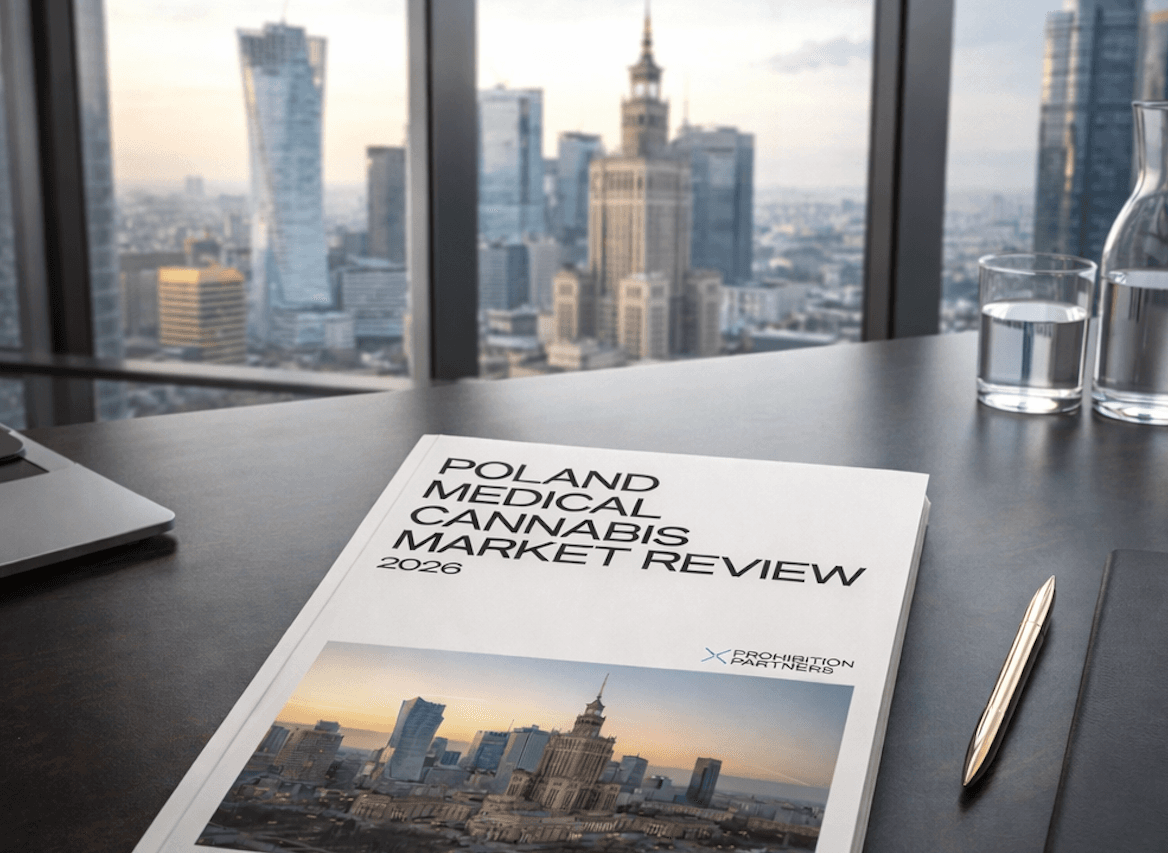
Polish pharmacies dispensed nearly 5,450 kilograms of dried cannabis flower in 2025, a 12% increase from the prior year, according to new data obtained by Prohibition Partners. By October, monthly volumes had surpassed the pre-ban peak for the first time, reaching a new all-time high in December.
However, the volume recovery masks a significant structural shift. Full-year revenue fell to approximately 253 million Polish zloty (~€60 million), a decline of roughly 19% from 2024’s peak, driven by accelerating price compression — the average implied price per gram dropped about 28% over the period. In other words, operators are now moving more product for less money.
The data is based on primary-source dispensing records obtained directly from Centrum e-Zdrowia, Poland’s national health data authority, covering 84 months of pharmacy-level activity from January 2019 through December 2025. It is believed to be the most granular Poland cannabis dataset currently available.
The telemedicine ban shock
In November 2024, Polish authorities required patients to attend in-person consultations for medical cannabis prescriptions, effectively ending the telemedicine-driven model that had fuelled rapid growth. The immediate impact was severe: monthly dispensed volumes collapsed by more than half within weeks.
The recovery took the full year to complete. The first quarter of 2025 was still materially depressed, but volumes accelerated through the remainder of the year.
As Business of Cannabis reported in July, much of the recovery has been shaped by professionalisation. The loosely regulated telemedicine operations that had driven earlier growth have largely been replaced by more structured clinic models — some deploying prescribers to temporary locations in smaller cities, partially recreating the geographic access that telemedicine had provided.
But barriers remain, and the market that emerged from the ban is not the same one that went in.
What it means for other markets
The structural resilience of patient demand — despite meaningful friction from the prescribing ban — has direct relevance for Germany, Australia and the UK, all of which are navigating questions about how their medical cannabis frameworks would withstand potential tighter regulation.
Poland is now effectively the only major European market where that question has been answered with granular monthly data showing the complete shock-and-recovery cycle. For investors and operators assessing regulatory risk elsewhere, that makes the underlying dataset difficult to replicate.
Prohibition Partners’ full report includes monthly and quarterly breakdowns, multi-year forecasts under bear, base and bull scenarios, and is accompanied by a fully interactive Excel workbook, formula-driven, not static, where buyers can modify assumptions and see the entire model recalculate. The underlying government source data is preserved in the file for independent verification.
The report and data package are available here
Get the weekly briefing
A round-up of the latest science, regulation and developments across the UK and Europe — in your inbox every week.