Cannabis explained
Cannabinoids vs Opioids: Is Chronic Pain Treatment at a Turning Point?
Could cannabinoids offer an alternative to opioids for people living with chronic pain – and what does the evidence actually show?
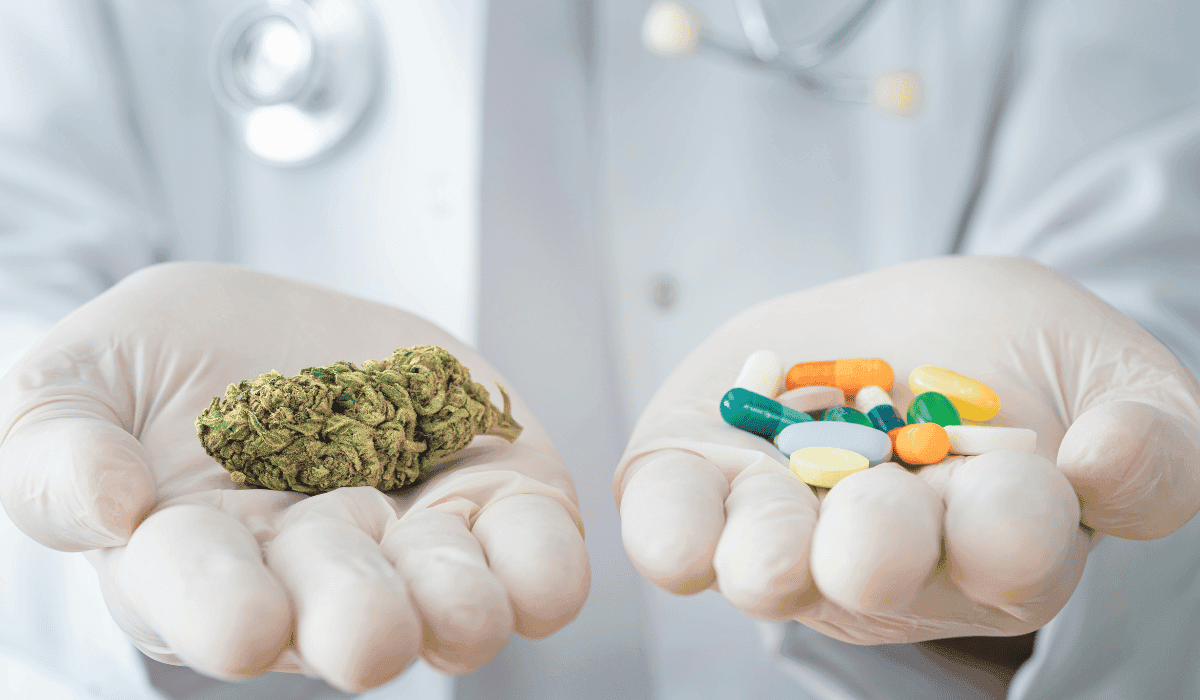
A cannabis-based medicine has been approved in Germany for chronic lower-back pain after outperforming opioids on some measures in a large, late-stage clinical trial – providing new evidence on how cannabinoids could compare with conventional painkillers.
Exilby, also known as VER-01, is a full-spectrum cannabis extract developed by German biopharmaceutical company Vertanical.
As Cannabis Health reported in June, it received market authorisation in Germany and Austria for chronic lower-back pain with a neuropathic, or nerve pain, component.
The approval followed two randomised controlled Phase 3 trials completed in 2025.
One compared VER-01 with a placebo in 820 patients. The second, involving 384 patients, compared the medicine directly with opioids.
The findings do not show that cannabinoids as a whole are more effective than opioids, but they do provide evidence to support the safety and effectiveness of Vertanical’s standardised cannabinoid medicine in a specific chronic pain condition.
Why Are Cannabinoids Being Compared With Opioids?
Opioids such as morphine and oxycodone are painkillers that act on opioid receptors in the brain and body.
But they are not recommended for every form of long-term pain.
For chronic primary pain – pain lasting for more than three months where there is no clear underlying condition, or where the impact is out of proportion to an observable injury or disease – the National Institute for Health and Care Excellence (NICE) says doctors should not start patients on opioids.
The UK health guidance body found no evidence that opioids were effective for chronic primary pain, while evidence on use lasting more than six months pointed to an increased risk of dependence.
Cannabis-based medicines have been explored as another option, particularly for patients who have not responded to conventional treatments. However, NICE does not currently recommend routinely offering cannabis-based medicines for chronic pain.
It found some evidence that CBD reduced chronic pain, but described the effect as “modest” – an average improvement of around 0.4 points on a ten-point scale. It also found “no evidence” that medicinal cannabis reduced opioid use.
NICE said the potential benefits were “small compared with the high and ongoing costs” and concluded that the products were not an effective use of NHS resources.
Its guidance therefore says doctors should “not offer” THC, THC-CBD combinations, dronabinol or nabilone to manage chronic pain in adults. CBD should only be offered for chronic pain as part of a clinical trial.
So what does the evidence show when a cannabinoid medicine and opioids are tested against each other?
| Chronic pain treatment | Cannabinoids | Opioids |
|---|---|---|
| How they work | Interact with the endocannabinoid system | Act on opioid receptors |
| Evidence | Varies by product and pain condition | Established painkillers, but long-term evidence varies by condition |
| Dependence | Can occur, particularly with THC-containing products | Recognised risk with prolonged use |
| NICE and chronic primary pain | Cannabis-based medicines are not routinely recommended for chronic pain | NICE says opioids should not be started for chronic primary pain |
| Key evidence gap | Which products benefit which patients | Whether long-term benefits outweigh harms in different chronic pain conditions |
How Did Exilby Compare With Opioids?
A Phase 3 randomised controlled trial published in Pain and Therapy in September 2025 compared VER-01 directly with commercially available opioids in 384 adults with chronic lower-back pain.
The study, led by Professor Winfried Meissner of Jena University Hospital, randomly assigned 192 patients to VER-01 and 192 to opioids. Patients’ doses were adjusted for three weeks, followed by 24 weeks of treatment.
The trial’s main measure was constipation, a common side effect of opioids.
Researchers found patients receiving VER-01 were four times less likely to develop constipation and three times less likely to use laxatives than those receiving opioids.
Both groups also reported less pain.
Across six months, average pain scores fell by 2.50 points among patients receiving VER-01 compared with 2.16 points among those receiving opioids – a difference of 0.34 points on an 11-point scale.
Sleep scores improved by 2.52 points with VER-01 compared with 2.07 points with opioids.
The researchers reported that VER-01 produced better pain relief and sleep outcomes across the six-month treatment period. However, differences in secondary outcomes measured at week 27 alone were not statistically significant.
The findings also apply specifically to VER-01 and chronic lower-back pain. They do not show that cannabis or cannabinoids generally outperform opioids.
Following Exilby’s approval, Professor Roger Knaggs, Professor of Pain Management at the University of Nottingham and President of the British Pain Society, said that chronic lower-back pain with a neuropathic component was “particularly difficult to treat”.
He said the authorisation could represent “an important breakthrough” and a “much-needed new direction” in long-term pain management.
What Other Evidence Is There for Exilby?
Exilby has also been tested against a placebo.
Earlier this year, a separate Phase 3 randomised controlled trial published in Nature Medicine involved 820 adults with chronic lower-back pain.
During the initial 12-week double-blind stage, 394 patients received VER-01 and 426 received a placebo.
Researchers reported a greater reduction in pain with VER-01, while patients also experienced improvements in sleep and physical function. The trial then followed patients for longer to examine continued treatment and what happened when treatment was withdrawn.
What Does the Wider Evidence Say?
Evidence for Exilby cannot automatically be applied to other cannabis-based medicines.
Different products contain different cannabinoids, formulations and doses, while chronic pain covers a range of conditions.
A 2024 systematic review and network meta-analysis published in BMJ Open compared the evidence for medical cannabis and opioids in chronic non-cancer pain across 90 randomised trials involving more than 22,000 patients.
Researchers found opioids produced small improvements in pain, physical function and sleep compared with placebo, while the evidence suggested similar effects for cannabis-based medicines.
The review found there was probably little or no difference between the two for physical function, while lower-certainty evidence suggested little or no difference in pain relief or sleep.
Patients receiving cannabis-based medicines were, however, less likely to stop treatment because of side effects than those receiving opioids.
The authors concluded that medical cannabis “may be similarly effective” to opioids for chronic non-cancer pain, while cautioning that most trials followed patients for no longer than six months.
More recent evidence remains cautious.
A Cochrane review published in January 2026 examined 21 studies involving 2,187 people with chronic neuropathic pain.
The researchers found “no clear evidence” that THC-dominant, balanced THC-CBD or CBD-dominant medicines increased the number of patients achieving at least a 50% reduction in pain. Certainty in much of the evidence ranged from very low to moderate.
Can Medical Cannabis Reduce Opioid Use?
Real-world studies have repeatedly reported reductions in opioid use among patients prescribed medical cannabis.
Data from Drug Science’s Project Twenty21, reported by Cannabis Health in 2023, found the number of 800 chronic pain patients reporting opioid use fell from 441 before treatment to 177 after starting medical cannabis.
The researchers described the reduction as “noteworthy”.
An earlier US study, covered by Cannabis Health in 2021, surveyed 1,321 people using cannabis for chronic pain.
Just over half reported substituting cannabis for opioids, and more than 65% of those said they had stopped taking opioids.
But both are observational findings. They can show that patients reported reducing their opioid use after using cannabis, but cannot establish that cannabis caused the reduction.
A 2021 systematic review and meta-analysis published in BMJ Open found the stronger evidence was less certain.
Researchers from McMaster University examined five randomised trials and 12 observational studies involving people with chronic pain who were already prescribed opioids.
Eight observational studies suggested adding cannabis reduced opioid use, but the researchers rated the evidence as “very low certainty”.
The randomised trials also provided very low-certainty evidence that adding cannabis had little or no impact on opioid use. However, all five trials instructed patients to maintain their opioid dose, limiting their ability to answer whether cannabis could help people cut down.
The researchers concluded that the “opioid-sparing effects” of medical cannabis remained “uncertain”.
Could Cannabinoids Replace Opioids for Chronic Pain?
Currently, there is not enough clinical trial data to support replacing opioids with cannabinoids across chronic pain treatment.
Randomised trials and reviews suggest some cannabis-based medicines can reduce pain, while real-world studies report patients cutting their opioid use. But the strength of that evidence varies considerably between products, conditions and study designs.
Exilby provides more specific evidence.
For people with chronic lower-back pain, one standardised cannabinoid medicine has now been tested directly against opioids in a Phase 3 trial, with patients experiencing less constipation and slightly greater average improvements in pain and sleep across six months.
It has also cleared an important regulatory hurdle.
As reported in June, the US Food and Drug Administration granted VER-01 Breakthrough Therapy Designation on 18 May.
The designation is not FDA approval. The FDA reserves it for treatments for serious conditions where preliminary clinical evidence suggests they may offer a “substantial improvement” over available therapies, and it allows development and review to be expedited.
“We believe VER-01 has the potential to change how chronic pain is treated and offer physicians a much-needed non-opioid solution,” Vertanical founder Dr Clemens Fischer said following the designation.
A further pivotal Phase 3 trial is now underway in the US, with initial results expected in 2027, according to Vertanical.
Cannabinoids vs Opioids at Frankfurt
The evidence will be examined at the Cannabis Health Symposium Frankfurt on 4 November.
A session titled Cannabinoids vs Opioids: A New Class of Treatment for Chronic Pain? will examine whether the approval of the first cannabinoid-based medicine for chronic lower-back pain represents a new direction in chronic pain treatment.
Secure Your Place
The Cannabis Health Symposium Frankfurt takes place at Mainhaus on 4 November 2026, bringing together healthcare professionals, industry and patient advocates to examine the evidence, regulation and practical realities of medical cannabis prescribing.
Find out more and book tickets for the Cannabis Health Symposium Frankfurt.
Get the weekly briefing
A round-up of the latest science, regulation and developments across the UK and Europe — in your inbox every week.