News
‘We Should Do Better’: Cannabis Industry Urged to Fund Research Into Women’s Pain
Experts at the first Cannabis Health Symposium in Germany urged the industry to fund research into women’s pain, with an endometriosis specialist outlining plans for a new cannabis study and appealing for €300,000 for research.
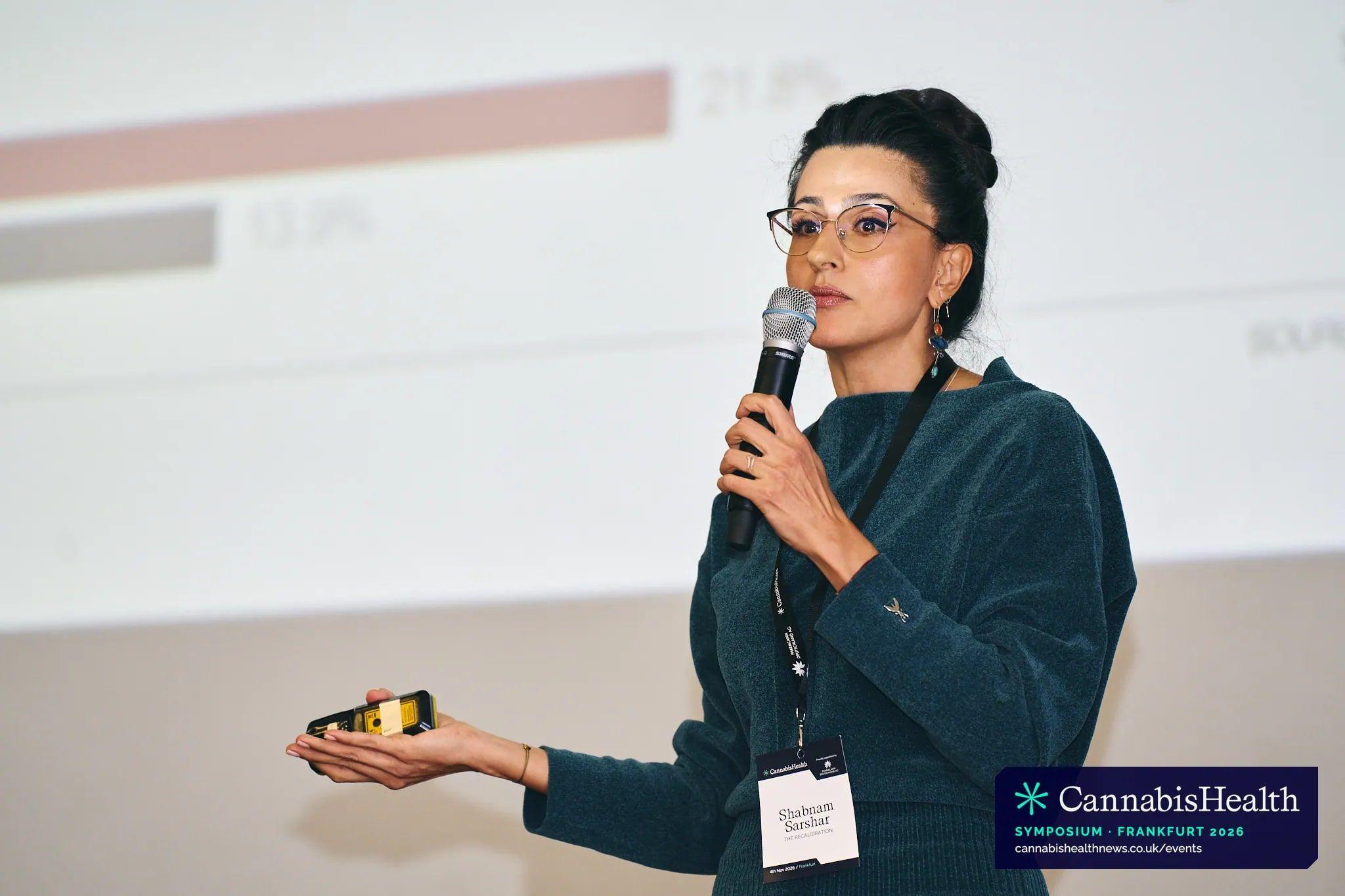
Medical cannabis companies should put their money where their mouth is by investing in research into women’s pain rather than “woman-washing” to make themselves look good, experts have argued.
Dr Shabnam Sarshar and Professor Sylvia Mechsner made the comments to an audience of healthcare professionals and industry operators working at the frontline of German medical cannabis practice at the Cannabis Health Symposium in Frankfurt on 4 November.
The leading voices at the intersection of cannabis and women’s health were speaking on the final session of the morning – Endometriosis and Beyond: Medical Cannabis in Women’s Health.
Sarshar, founder of women’s health education platform The Recalibration, challenged companies to move beyond “woman-washing” and actually commit budgets and resources to research rather than just talking about it.
“We should do better,” she told attendees.
Mechsner, who leads the endometriosis centre at Berlin’s Charité university hospital, appealed for €300,000 to investigate how cannabinoids interact with the tissue and nerves affected by endometriosis – a chronic inflammatory condition affecting an estimated 2 million women in Germany.
“If there’s a market for these medicines, and companies want that market to exist, they need to invest in basic and clinical research,” she said.
And while Mechsner discussed the difficulties women face getting treatment for endometriosis and Sarshar looked at women’s chronic pain more broadly – both were united in urging companies to fund more research to promote a better understanding of how women’s biology affects their response to treatment.
The session formed part of a programme aimed at giving practitioners the knowledge they need to practise confidently and safely in Germany following the successful launch of the Cannabis Health Symposium in London last year.
‘Women Look for Their Own Solutions’
In her presentation about the little-known health condition and the “gaslighting of women’s pain,” Mechsner said that sufferers can wait eight to 10 years for a diagnosis.
“People are left alone. Nobody seems to care that they can’t attend school, can’t complete their vocational training, or are experiencing problems in their relationships.”
With diagnosis, treatment and support falling short, “women look for their own solutions”, she said. For some, that includes cannabis.
Indeed, as Cannabis Health explored in its women’s health guide last year, clinics have reported growing numbers of women seeking help with pain.
Mechsner’s team wanted to understand what women were already doing to manage their symptoms.
A survey published in Archives of Gynecology and Obstetrics in 2024, which Mechsner co-authored, examined responses from 912 women with endometriosis in Germany, Austria and Switzerland.
It found that among the 114 who used cannabis, 91% reported better sleep and 90% reported improvements in menstrual pain. Around nine in 10 also reported reducing their use of other pain medication.
“That was an important finding for us,” Mechsner said. “And it encouraged us to attempt a clinical study.”
That pilot study, which was published in PLOS One in September 2026, enrolled 30 women whose endometriosis-related pain had not responded adequately to treatment, with 27 completing the final analysis.
They received an oral extract containing equal proportions of THC and CBD alongside their existing treatment over three months. Researchers reported reductions in pain, days spent in pain and use of other pain medicines, as well as improvements in fatigue, anxiety and several measures of wellbeing.
But Mechsner said the absence of a placebo group meant the findings could not establish how much improvement was caused by cannabis.
“What we’re really missing is a placebo-controlled study. But that requires a great deal of funding,” she said.
“It’s not something I can simply conduct with my own team.”
Mechsner said she is currently planning another observational study using high-dose CBD with a low THC concentration, with an additional THC capsule available on days when patients experience pain.
She called on cannabis companies to provide €300,000 for basic research into cannabinoid receptors and nerve fibres in endometriosis lesions, with further funding needed for larger clinical trials.
“We can’t finance that alone,” she said.
“Surveys aren’t going to get cannabis into clinical guidelines. For that, we need randomised controlled trials.”
More Painkillers, Yet More Pain
In the second part of the session, Sarshar took to the stage to argue the problems extend well beyond endometriosis.
The founder of women’s health education platform The Recalibration pointed to German healthcare figures showing that women use more painkillers than men, yet experience higher rates of conditions including migraine and chronic back pain.
“So we’re getting more prescriptions and taking more daily doses, but we’re still suffering more from pain,” she said.
“What the hell are we doing wrong in addressing women’s pain?”
She said research has too often treated male biology as the default, overlooking differences in hormones and the ways nerves and immune cells respond to pain.
Sarshar also discussed how oestrogen interacts with the endocannabinoid system, the body’s signalling network involved in pain, sleep, mood and immune activity.
She wants researchers to examine what those interactions mean for treatment, including during perimenopause and menopause.
Speaking to Cannabis Health ahead of Frankfurt, she said research had “rarely been designed around women’s biology”.
“In other words, we are using interventions that affect a hormone-sensitive system without enough information about how hormonal transition changes the response.”
Writing on social media after the symposium, she described failures in women’s pain care as “Multi-Dimensional”.
“But naming the gap and wishful thinking won’t close it,” she wrote.
“What we need now is not simply more women counted in trials. We need studies deliberately designed for women.”
Continuing the Discussion in London
Women’s health will also feature at the Cannabis Health Symposium at Conway Hall, London, on 26 November.
Dr Grace Blest-Hopley, founder and researcher at Hystelica, will discuss unmet needs across menopause, endometriosis, PMDD and chronic pelvic pain.
Get the weekly briefing
A round-up of the latest science, regulation and developments across the UK and Europe — in your inbox every week.