News
‘That Line is Blurred’: Cannabis Researcher Prof Bernd Werse on Medical Vs Recreational Use
Ahead of Frankfurt’s Cannabis Health Symposium, Professor Bernd Werse discusses changing cannabis use and the evidence policymakers still need.
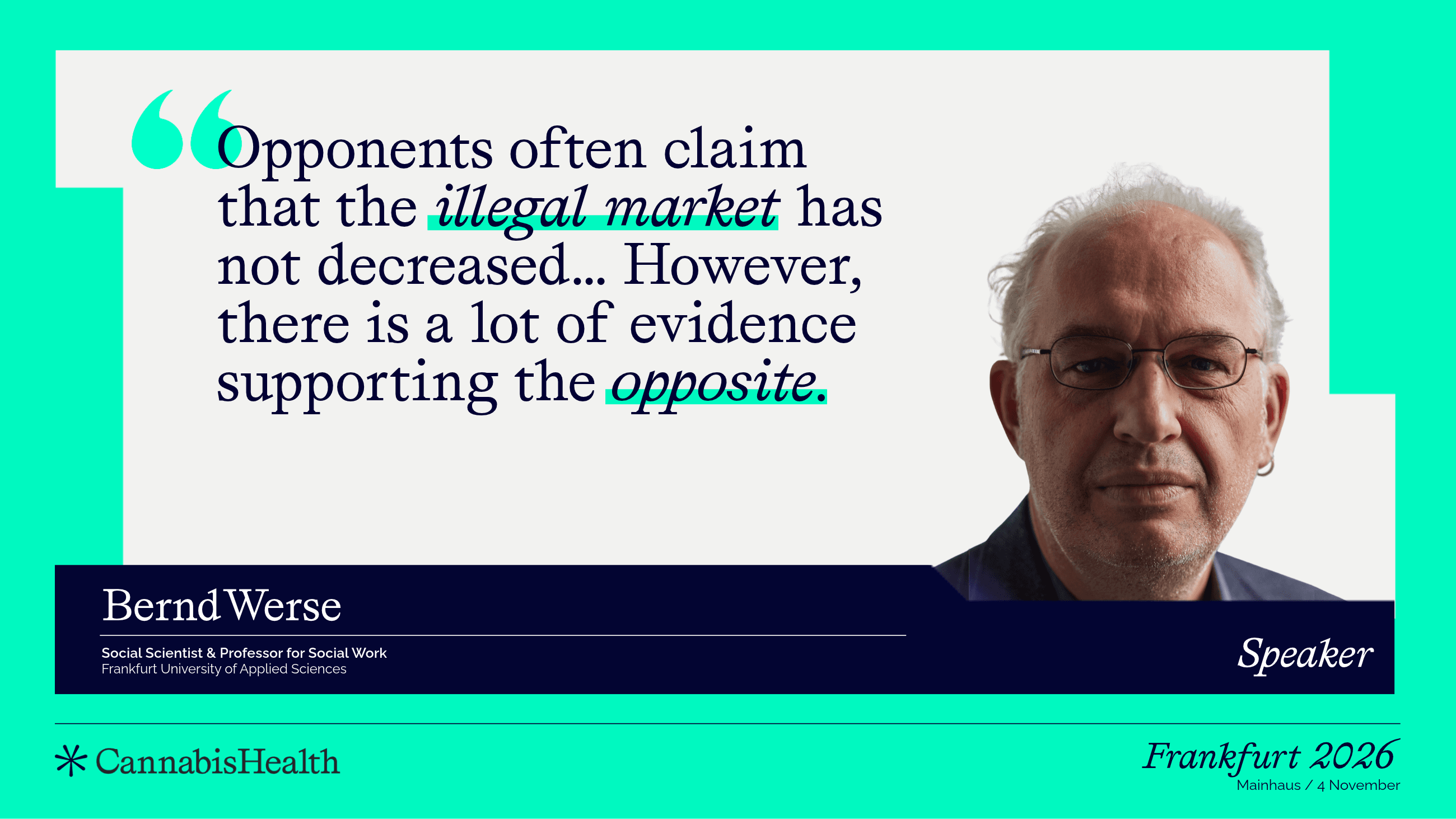
Distinguishing between medical and recreational cannabis use is becoming increasingly difficult, a drug researcher has said ahead of an event next week examining cannabis policy, evidence and patient care.
Professor Bernd Werse, a sociologist and professor of social work at Frankfurt University of Applied Sciences, will speak at the Cannabis Health Symposium on 4 November.
Is he due to join the Evidence or Ideology? Making Cannabis Policy Without Data session alongside European Medicinal Cannabis Association general secretary Sita Schubert, former Frankfurt drugs department head Dr Artur Schrörs and Copeia co-founder Garvin Hirt.
Speaking to Cannabis Health ahead of the one-day event, he questioned claims about the illegal market and called for better evidence on where people obtain cannabis.
Cannabis Health: What has changed since Germany reformed its cannabis laws, and what does the research tell us so far?
BW: Broadly, I would say that acceptance of cannabis use has increased; for example, many people have started to grow cannabis, even some who do not use it. Due to the (limited) allowance of smoking in public, I would say that also the occasions in which you could smell people using cannabis have increased. Nevertheless, there still are many people who oppose the law.
CH: Are there claims about cannabis – from either side of the debate – that the evidence doesn’t support?
BW: Yes, opponents often claim that the illegal market has not decreased – with rising numbers of seizures as evidence. However, there is a lot of evidence supporting the opposite.
CH: What are you seeing in Frankfurt? Has the way people buy and use cannabis changed?
BW: Not only in Frankfurt, most regular users now use licit channels, mainly home cultivation and online pharmacies. The latter is now even more attractive than illicit sources because of lower prices. I would expect that the main share of illicit sales is for imported hashish – the price for it has obviously continued to drop
CH: Is it possible to draw a clear line between medical and recreational use? How do you handle that in your research?
BW: No, with very easy access via telemedicine, it is not possible anymore to draw that line, as seen in a recent survey we did for cannabis and driving – we could not differentiate between “real” medical users and others. However, generally that line is blurred because of people with clear indications for medical cannabis use, but appreciation for the psychoactive effects as well.
CH: What do we still need to find out, and what should politicians do while those questions remain unanswered?
BW: We still need more evidence on procurement. And we need to find out how the skyrocketing medical market with low prices, high THC content, and adverts directed towards recreational users might affect attitudes and patterns of use.
CH: What would you like people to take away from your session in Frankfurt?
BW: That claims of “rising illicit markets” are not true, and that we need better regulation for medical sales, including advertising.
Hear more from Professor Bernd Werse at the Cannabis Health Symposium, Mainhaus, Frankfurt, on 4 November. View the programme and book tickets here.
Get the weekly briefing
A round-up of the latest science, regulation and developments across the UK and Europe — in your inbox every week.