Cannabis explained
EKOCAN Explained: What Germany’s Cannabis Study Has Found So Far
What have Germany’s cannabis reforms meant for drug use, public health, young people and the black market?
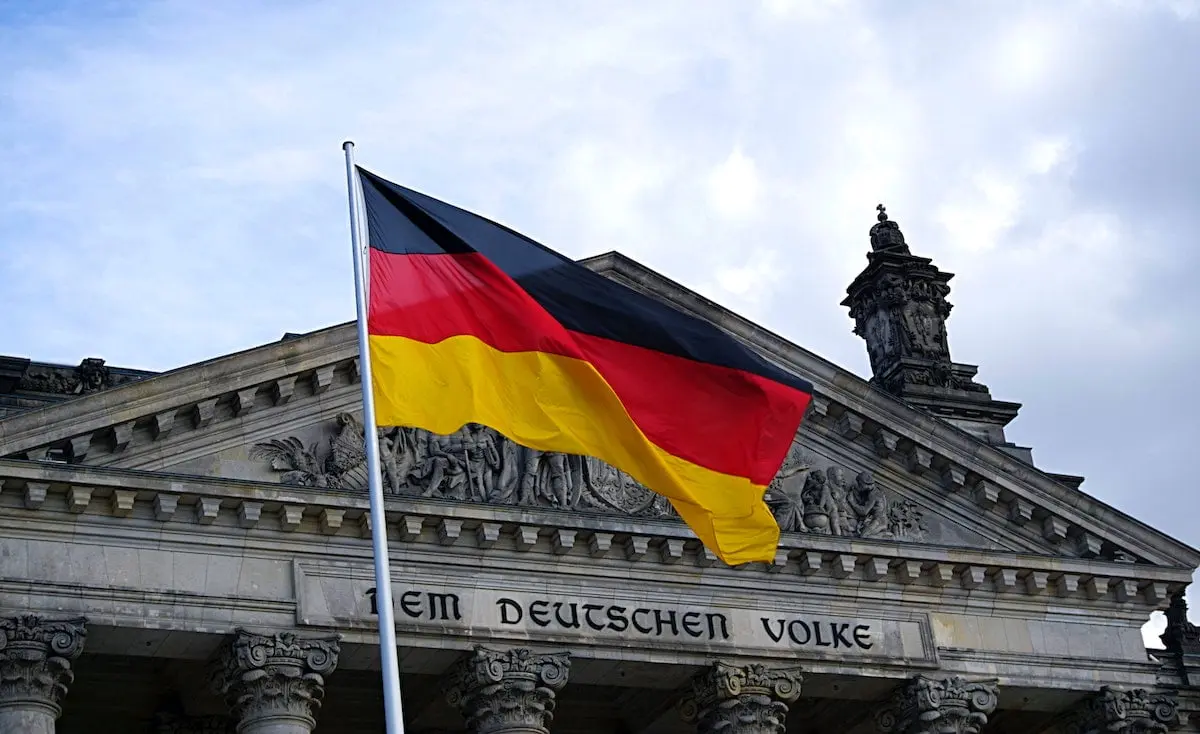
What have Germany’s cannabis reforms meant for drug use, public health, young people and the black market?
Germany is attempting to answer those questions through the Evaluation of the Consumer Cannabis Act project, known as EKOCAN – the government-mandated scientific evaluation of changes introduced under Germany’s Cannabis Act.
The reforms, which came into force in April 2024, changed the rules around both medical and non-medical cannabis.
EKOCAN is focused mainly on the non-medical reforms, but its findings have also become part of the debate over Germany’s growing medical cannabis market and how it should be regulated.
Ahead of the Cannabis Health Symposium in Frankfurt, which will examine the evidence behind Germany’s cannabis policies and what they mean for prescribing and patient care, Cannabis Health looks at what EKOCAN has found so far – and what the evidence can and cannot tell us.
What is EKOCAN?
EKOCAN is a multi-year scientific study of Germany’s Consumer Cannabis Act, or KCanG, looking at its impact on public health, young people and cannabis-related crime.
The non-medical KCanG reforms allowed adults to possess up to 25g in public, grow up to three plants at home and, from July 2024, obtain cannabis through non-commercial cultivation associations.
EKOCAN therefore focuses on those changes rather than whether cannabis works as a medical treatment.
That said, the study finds substantial overlap between the two markets and discusses the medical regime within the broader market analysis.
It noted that a clear empirical separation between medical and recreational users is ‘not feasible’ and that medical prescriptions increasingly serve as an alternative legal access route for consumers who might otherwise use illicit channels.
The project is coordinated by Dr Jakob Manthey, a researcher at the Centre for Interdisciplinary Addiction Research at University Medical Center Hamburg-Eppendorf.
It began in January 2025 and is due to run until April 2028.
The first interim report was published in September 2025, followed by the second in April 2026.
What does EKOCAN measure?
EKOCAN is looking at whether the reforms are changing how much cannabis people use, where they get it and the effect on public health, young people and crime.
Researchers are using population surveys, hospital and crime records, interviews and cannabis market data to build that picture.
The second report also looked more closely at organised crime and Germany’s medical cannabis market.
What has EKOCAN found so far?
The main finding so far is that cannabis use has not risen sharply since the reforms, while more people are getting it through legal routes.
The first EKOCAN report found no surge in cannabis use, while use among young people was falling and there were early signs of a move away from the black market toward legal sources.
The second report found that more people were growing cannabis at home or or getting it on prescription – but most still got hold of it from other people while very few used cannabis clubs.
Researchers also looked more closely at whether people were consuming more cannabis since the reforms. One way they did this was by testing wastewater in 15 German cities for traces left behind after the body processes THC.
Across 3,239 measurements taken before and after the reforms, researchers found “no significant short-term effect on consumption” linked to the change in the law, as Business of Cannabis reported.
Cannabis use among adults had risen slightly, but researchers said this continued a trend that had already begun before the reforms. The increase was “consistent with the pre-existing trend”, with “no evidence of a post-legalisation surge”.
Where are people getting cannabis?
EKOCAN has found that more people are growing cannabis themselves, but informal sharing between people remains the most common source.
In the first half of 2024, 5.4% of surveyed consumers said home growing was their main source. By the second half of 2025, that had risen to 21.4%, according to Cannabis Health’s analysis of the second EKOCAN report.
But 35.2% still said their main source was informal sharing with other people.
Cannabis clubs have played a much smaller role.
Just 366 cultivation associations had been approved by October 2025, covering fewer than half of Germany’s counties. They accounted for less than 0.1% of estimated cannabis demand.
That matters because the reforms were intended, in part, to move consumers away from the black market.
The government had also proposed a second stage of the reforms involving pilot schemes where cannabis could be sold through regulated commercial outlets.
Business of Cannabis reported in October that EKOCAN researchers wanted those pilots to go ahead, arguing that Germany needed another legal source of cannabis before researchers could properly assess its effect on the black market.
What has EKOCAN found about young people?
So far, EKOCAN has not found an increase in cannabis use among young people following the reforms.
As Cannabis Health reported in February, cannabis use among young people had already been falling since 2019, and that decline appears to have continued after the law changed.
Professor Daniel Kotz, one of the researchers involved in EKOCAN, said the available evidence showed that the “declining trend” in the proportion of young people using cannabis had continued after partial legalisation.
The second report reached a similar conclusion, as reported in Cannabis Health’s analysis of the findings, that use among young people had remained stable or declined slightly.
Their perception of the risks associated with cannabis had also remained broadly stable, with some evidence that young people were more likely to see cannabis as risky after the reforms.
However, EKOCAN identified a different concern around early support for young people.
The reforms reduced one of the routes through which young people using cannabis were referred to support services.
EKOCAN said programmes intended to intervene early had “failed to meet the legislature’s expectations” in closing the gap created by decriminalisation and recommended better coordination between services.
Why is there disagreement over the findings?
EKOCAN’s interim findings have become part of a wider political debate over the future of Germany’s cannabis reforms.
Business of Cannabis examined the reaction to the first EKOCAN report in October 2025 and found politicians drawing very different conclusions from the same evidence.
SPD and Green politicians argued that the findings supported continuing the reforms, pointing to evidence that cannabis use among young people had not increased since the law changed.
CDU/CSU politicians focused instead on problems with youth protection. CSU parliamentary leader Alexander Hoffmann argued that the law had “done a disservice to youth protection and road safety”, while Federal Drug Commissioner Hendrik Streeck pointed to a decline in early intervention for young people and called for a greater focus on prevention and support. Some CDU politicians went further and called for the law to be repealed entirely.
That contrasted with EKOCAN’s own conclusion at the time that there was “currently no urgent need for action” to change the KCanG.
The disagreement continued when the second report was published.
Germany’s Federal Health Ministry, Interior Ministry and Family Ministry, together with the Federal Drug Commissioner, said the findings showed an “urgent need for action”. In particular, they called for better ways of getting young cannabis users into early support, tighter controls around online access to medical cannabis and stronger action against organised crime.
Health Minister Nina Warken also criticised the “blurred boundary” between medical and non-medical cannabis, while Commissioner Streeck claimed some online services were targeting recreational consumers rather than patients.
But some medical experts argued that the evidence was not yet strong enough to draw firm conclusions in either direction.
In a joint statement published on 10 April, three German medical societies specialising in psychiatry, addiction and child and adolescent mental health challenged the interpretation of some of EKOCAN’s findings.
The German Association for Psychiatry, Psychotherapy and Psychosomatics (DGPPN), German Society for Addiction Research and Addiction Therapy (DG-Sucht) and German Society for Child and Adolescent Psychiatry, Psychosomatics and Psychotherapy (DGKJP) said the available evidence was still too limited to conclude that cannabis use had not increased since the reforms.
They described the second report as important but “preliminary” and warned that it did not yet provide a robust basis for a final assessment of Germany’s cannabis policy.
What does EKOCAN say about medical cannabis?
Medical cannabis is not the main subject of EKOCAN.
The evaluation concerns the KCanG, which covers cannabis for non-medical use.
However, the second interim report devotes part of its analysis to Germany’s medical market because the two have become increasingly difficult to separate.
By 2025, up to 200 tonnes of medical cannabis were available in Germany, including imports and 2.6 tonnes grown domestically, according to Cannabis Health’s coverage of the second EKOCAN report.
Medical cannabis accounted for around 9% to 13% of estimated overall demand.
But researchers could not determine how much of that cannabis was actually being used to treat a medical condition.
The report also examined online medical cannabis platforms.
A legal assessment commissioned for EKOCAN found that platforms were “systematically violating” Germany’s pharmaceutical advertising rules. Section 10 of the Heilmittelwerbegesetz prohibits prescription medicines from being advertised to the general public.
The report raised a separate concern about the strength of some medical cannabis products. It said high-potency flower – particularly products containing more than 10% or 15% THC – carried an increased risk that was not adequately supported by existing clinical evidence.
EKOCAN therefore recommended that lawmakers consider “capping the THC content of freely prescribable cannabis flowers”.
Why does EKOCAN matter for prescribing?
EKOCAN does not tell clinicians whether they should prescribe medical cannabis to an individual patient.
Its importance for prescribing comes from what it tells policymakers about the wider medical market.
Germany’s medical cannabis market has expanded rapidly since April 2024, alongside the growth of telemedicine and online prescribing. Imports nearly tripled in 2025, reaching more than 200 tonnes.
That growth is now at the centre of a separate debate over proposed changes to Germany’s Medical Cannabis Act, or MedCanG.
As Business of Cannabis has reported, the proposed changes would require patients to see a doctor in person before initially being prescribed cannabis flower and restrict mail-order delivery. The proposals are aimed particularly at the rapid growth of online prescribing and supply
The government has linked the proposals to the sharp increase in imports. Medical cannabis imports rose by more than 400% year-on-year in the first half of 2025, while prescriptions covered by statutory health insurance rose much more slowly. The government argues that the gap suggests some self-paying consumers are using online prescription services to obtain cannabis for non-medical purposes.
What happens next?
EKOCAN will continue to collect and analyse evidence for two more years.
The project will continue until April 2028, giving researchers more time to establish whether the changes now appearing in the data are the result of the reforms or part of longer-term trends. Germany is meanwhile continuing to debate changes to both its medical and non-medical cannabis systems.
The evidence behind those decisions will be discussed at the Cannabis Health Symposium in Frankfurt on 4 November.
The programme includes “Evidence or Ideology? Making Cannabis Policy Without Data”, a panel featuring Professor Bernd Werse, Director of the Institute for Addiction Research at Frankfurt University of Applied Sciences; Sita Schubert, General Secretary of the European Medicinal Cannabis Association; and Dr Artur Schrörs, former head of Frankfurt’s Drugs Department.
The session will examine how evidence is being used in German cannabis policy and what gaps remain in the available data.
Secure your place
The Cannabis Health Symposium Frankfurt will take place at Mainhaus on 4 November 2026, from 9.30am to 5pm.
Find out more and book tickets for the Cannabis Health Symposium Frankfurt.
Concession tickets are available for healthcare professionals by application.
Get the weekly briefing
A round-up of the latest science, regulation and developments across the UK and Europe — in your inbox every week.