News
Jersey to Introduce Tighter Rules for Medical Cannabis Prescribing
Plans for greater scrutiny and monitoring have been broadly welcomed, but some patients fear a “knee-jerk” reaction and say cannabis is not the “whole story”.

Following the tragic death of a medical cannabis patient in Jersey, the government has announced plans for new restrictions on the flourishing local industry, but patients are now warning their access to treatment could be jeopardised. How can the island protect vulnerable patients without making life difficult for those who rely on it? Cannabis Health explores the debate over Jersey’s proposed reforms.
Prescribed medical cannabis was the “predominant cause” of a Jersey man’s worsening mental health in the weeks before he died in a flat fire, an inquest has found.
David Morgan (66) died from carbon monoxide poisoning following a fire at his flat in August 2025.
A four-day inquest held in Jersey last week found that Morgan had displayed “psychotic symptoms” in the weeks before his death.
In a 44-page document seen by Cannabis Health, the coroner concluded: “David’s behaviour became increasingly impulsive, disinhibited and erratic and he was displaying psychotic symptoms.
“These symptoms contributed both to the circumstances of the ignition of the fire and to David’s failure to escape from it.
“The predominant cause of these symptoms was his consumption of prescribed, unlicensed cannabis-based products for medicinal use (CBPMs).
“He died from acute carbon monoxide poisoning resulting from exposure to fire, contributed to by starvation… and the consumption of unlicensed CBPMs.”
‘Unlicensed is a regulatory category, not a quality standard – these products are pharmaceutical-grade, legally imported, and prescribed by registered clinicians under MHRA oversight.
The coroner called for “urgent” improvements to communication between GPs, mental health services and cannabis prescribers, warning that the work was necessary to “prevent future deaths”.
He also suggested that the government consider temporarily pausing new cannabis prescriptions for mental health conditions such as anxiety and depression while improvements are made.
The government, however, in response to questions from Cannabis Health, has said it lacks the legal power to enforce such a pause under current legislation.
But it made clear that long-promised reforms are planned for next year, including requiring regular in-person appointments and better communication between GPs and cannabis prescribers.
It comes as Oliver’s Law, a UK campaign launched by the family of Oliver Robinson, is calling for tighter safeguards around prescribing medical cannabis to patients with mental health conditions.
The campaign follows an inquest in January that found that prescribed cannabis contributed to the 34-year-old’s worsening mental state and formed part of the “chain of events” leading to his death in 2023.
While some islanders who spoke with Cannabis Health welcomed the proposed safeguards for protecting vulnerable patients, others fear a “knee-jerk” response to the case could jeopardise access to treatment they say has transformed their lives.
Patients fear losing access to treatment
Islander Kerrie Mizon, who has been prescribed medical cannabis for chronic pain since 2019, said she was “extremely worried’ by the changes.
“Depriving me of the only treatment I can access for my pain would change my day-to-day quality of life to a point I would have to take prescribed opiate medication, leaving me unable to drive, exercise and generally live.”
Another patient, who asked to remain anonymous, said medical cannabis has been “life-changing” in helping to manage arthritis and longstanding sleep problems.
“I fully support sensible regulations and patient safety, but I would hate to see changes that make it unnecessarily difficult for genuine patients to access treatment that has made such a huge difference to their lives.”
Harry Betts, prescribed cannabis for ADHD and sleep, welcomed reforms as “cementing the process that’s already in place” and supported “greater scrutiny” for patients with “severe mental illness”.
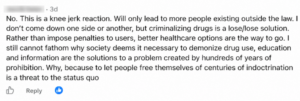
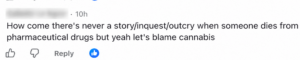
But some islanders have taken to social media in the wake of the inquest to argue that cannabis was being made a convenient “scapegoat”, urging authorities to address failings and long waiting lists in mental health services “rather than passing the blame onto medicinal cannabis”.
What happened in David Morgan’s case?
Mr Morgan, who had a history of anxiety, depression and alcohol dependence, began receiving prescriptions from Windsor Medical Practice in 2024. Two clinicians approved treatment after a telephone consultation. He was never seen in person.
In July 2025, his GP warned the cannabis clinic about his increasingly unusual behaviour – saying continued prescribing was not “in David’s best interests”.
But the clinic issued two more prescriptions of 20g of cannabis flower containing 30% THC.
Police contacted other services three times in the month before his death, and his family repeatedly sought support from mental health.
But no one from the team responsible for helping people with a mental health crisis met with him to check on his condition, something the coroner described as a “missed opportunity”.
What is the government proposing?
Jersey has been developing tighter cannabis prescribing rules for several months, echoing moves in Germany and Australia to strengthen oversight and require in-person appointments.
In a statement to Cannabis Health, Jersey’s Health Minister Tom Binet said: “In early 2027, I will bring forward new legislation requiring doctors who prescribe unlicensed medicinal cannabis to adhere to more stringent practices.
“This will include requiring the review of a patient’s medical records before prescribing; requirements to repeatedly meet face-to-face with patients during treatment or before amending the prescribed dose; and required recording of adverse reactions.”
Binet continued: “Furthermore, doctors will not be able to prescribe medicinal cannabis unless they have an on-island GMC responsible officer, making it easier to investigate any concerns about their individual practice.
“After those initial controls have been introduced, I will then develop proposals related to a full licensing scheme for all doctors who prescribe medicinal cannabis in Jersey.”
The plans follow repeated concerns from Jersey’s senior health officials about alleged “over-prescribing” of high-THC products, reports of a buoyant secondary market where prescriptions are sold on illegally, and the drug’s impact on patients with mental health conditions.
Government figures show cannabis was recorded as a factor in more than 20% of mental health ward admissions in 2025, with prescribed cannabis reported in around 6% of cases.
An inquest in 2024 also found that prescribed cannabis “more likely than not” adversely affected the mental health of Rebecca Louise Vibert before she took her life in 2023.
Calls for stronger safeguards
Jersey’s Primary Care Body, which represents island GPs, welcomed the proposed safeguards.
“Any steps that improve the safety, oversight and monitoring of medicinal cannabis prescribing would be positive,” its board told Cannabis Health.
Dr Kirstie Ross, medical director of Jersey cannabis clinic Carpathia, supported tighter regulation but cautioned against restrictions that could make treatment harder for patients to access.

Dr Kirsty Ross, Medical Director, Carpathia
“I understand why the tragic death of David has elicited a strong response, and I welcome this. However, throwing the baby out with the bath water is not the most sensible way forward for all,” she said.
“Cannabis is an essential medication to many people, and when used correctly and under strict guidelines and regulations, it has tremendous benefit.”
She said she “wholeheartedly” supported stricter rules, including limits on the amount and THC strength of cannabis prescribed, to protect patients.
Dr Ross also called for better communication between cannabis clinics, GPs, psychiatrists and police, and welcomed plans to require patients to attend appointments in person.
“We, at Carpathia Clinic, insist on a face-to-face initial consultation,” she said. “In the few cases where patients have been unable to make it to clinic, we have provided a home visit.”
Campaigners warn against further restrictions
Simon Harrison, coordinator of End Cannabis Prohibition Jersey, said the government’s proposals largely formalised existing guidance for prescribing unlicensed medicines.
And while he also welcomed measures to improve patient safety, the campaigner warned that quarterly face-to-face appointments could create difficulties for patients with limited mobility and additional costs for those on tight incomes.
Harrison urged ministers to allow the proposed regulations to take effect before considering further restrictions – particularly limits on the amount of cannabis patients can receive, as called for by Dr Ross.
“It should be noted that the arbitrary imposition of prescription limits may lead to patients sourcing their additional needs from the black market, which could expose them to inferior products and possibly even synthetic cannabinoids,” he told Cannabis Health.
He also argued that the focus on cannabis prescribing following Mr Morgan’s death risked overlooking wider problems in the healthcare system.
“There seems to have been plenty of opportunities to help this man, which tragically were not acted upon, ” Harrison said. His medicinal cannabis use may have played a part in his deterioration, but it’s not the whole story.”
Harrison warned against a “political knee-jerk” reaction and called for a “more holistic” approach to cannabis policy and healthcare.
What does the evidence say about cannabis and psychosis?
Research has established an association between cannabis use and an increased risk of psychosis, particularly among those who use it frequently or consume products containing high levels of THC.
However, most people who use cannabis do not develop psychosis, and individual risk varies depending on factors including age and existing vulnerabilities.
And as Cannabis Health set out in an in-depth explainer, much of the evidence comes from studies of recreational cannabis use, rather than patients receiving cannabis under medical supervision.
Why is medical cannabis so widely prescribed in Jersey?
Jersey, a British Crown Dependency with its own government and laws, voted to legalise medical cannabis in 2019.
Several private clinics subsequently opened, including Carpathia, Island Pharmacy, Lyphe, Medicann and Windsor.
Unlike the UK, where unlicensed cannabis-based medicines can only be initiated by doctors on a specialist register, Jersey allows anyone authorised to prescribe medicines – including dentists and vets – to prescribe medical cannabis.
By 2022, an estimated 4,300 Islanders – just over 4% of the population – were receiving medical cannabis, according to a government audit published in 2024.
Prescriptions subsequently rose by 35%, from 53,477 in 2024 to 72,065 in 2025, according to government figures.
For Harrison, part of the explanation lies in Jersey’s expensive and unpredictable black market, which before 2019 was dominated by imported cannabis resin, or ‘hash’, costing £12–£20 per gram.
Supplies depended on what could cross the island’s borders, and pandemic travel restrictions led to a “weed drought” in summer 2020, just as cannabis clinics began opening.
Customs figures show the quantity of seized cannabis fell by almost 95% between the pandemic year of 2019 and 2022, from 71.6kg to 3.7kg, before rising to 15.1kg in 2023.
Still, Harrison argues that medical cannabis remained a considerably cheaper alternative.
“Black market cannabis is more expensive than medicinal cannabis by a factor of 3 or 4,” he said.
“In the UK, the black market price is comparable with that of medicinal, so there’s little incentive to get a ‘script.”
He also pointed out that islanders are already accustomed to paying around £45 for GP appointments, unlike UK patients using the NHS for free – another factor he believes helps explain the difference in prescribing rates.
And what about recreational cannabis in Jersey?
The debate comes two years after Jersey politicians rejected a proposal to decriminalise recreational cannabis by a single vote.
Subsequent plans, including a government-controlled trial of recreational cannabis sales, were withdrawn over concerns about their wording.
Although the Health Minister said they would return “in due course”, no date has been set.
And for now, the government’s attention appears to have shifted towards tightening medical cannabis regulations.
Cannabis Health has contacted Windsor Medical Practice for comment but did not receive a response.
Get the weekly briefing
A round-up of the latest science, regulation and developments across the UK and Europe — in your inbox every week.