Cannabis explained
Medical Cannabis and Driving in the UK: the Law, the Science and Your Rights
There remains debate within policing over how prescribed medical cannabis patients should be dealt with safely at the roadside.
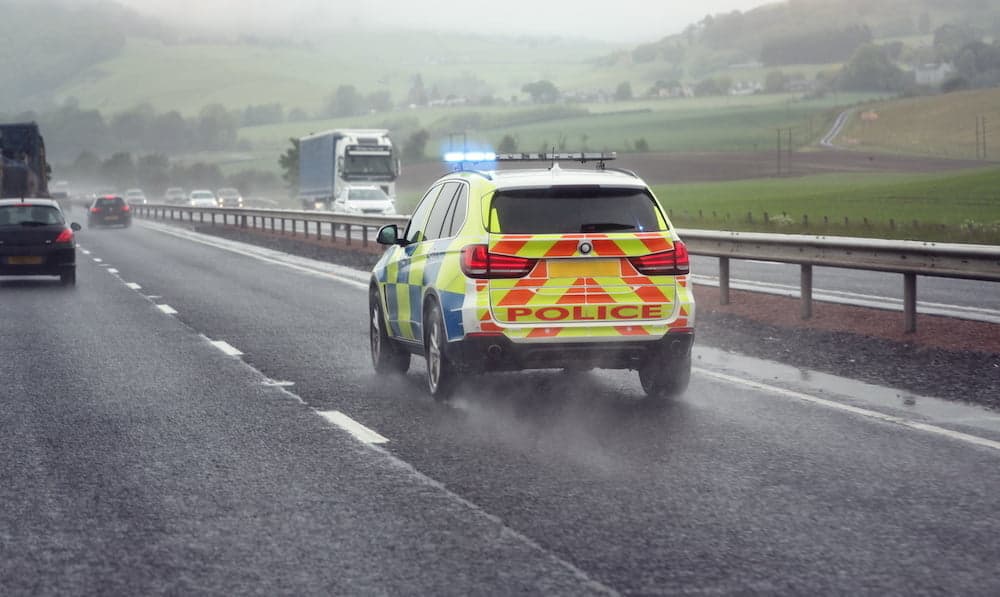
Can you drive while taking medical cannabis in the UK?
It is generally legal to drive when taking cannabis-based medicines in the UK, as long as you are not impaired, the medication has been prescribed by a specialist consultant, and you are following the instructions provided by your doctor and the manufacturer of the medicine.
As with other prescription drugs, the Driver and Vehicle Licensing Agency says it is down to the individual driver to judge whether their ability to drive safely is impaired.
It is recommended that medical cannabis patients speak to their prescribing doctor for further advice, with several things to consider to ensure they know their rights and responsibilities on the road.
Since the change in legislation allowing cannabis-based products for medicinal use (CBPMs) to be prescribed in 2018, the DVLA hasn’t issued any specific guidance related to these medicines.
This, along with the lack of training and guidelines for police officers, has contributed to a great deal of confusion when it comes to driving with a prescription for CBPMs.
In some cases, this has led to patients being arrested and convicted of driving-related offences
Richard List, a retired Detective Chief Superintendent and Controlled Drug Liaison Officer who has been involved in developing national police guidance on medical cannabis, says a lack of awareness among officers remains a key challenge.
“The problems that are facing the police are the same problems that are facing the police in relation to medical cannabis in general,” he told Cannabis Health.
“And that is there is a lack of knowledge, a lack of understanding, and as a result, a lack of acceptance of medical cannabis.”
List says this becomes more complex in relation to driving, where officers must navigate specific drug-driving legislation and make decisions around impairment, testing and enforcement, which can result in inconsistencies in how prescribed patients are dealt with.
What does the law say about driving and medical cannabis?
DVLA guidelines treat CBPMs the same as other prescription drugs.
Under Section 4 of the Road Traffic Act (1988) it is illegal to drive with prescription drugs in your body if it impairs your driving.
It is also an offence to drive if you have over the specified limits of certain non-prescription drugs in your blood even if there is no evidence of impairment.
Under section 5A of the Road Traffic Act 1988, driving with more than 2 micrograms of THC per litre of blood is a criminal offence. The prosecution does not have to prove that the individual’s driving was impaired.
Patients who test above the limit have a Statutory Medical Defence under Section 5A, meaning they are not guilty if the drug was lawfully prescribed, taken in accordance with directions, and possession was lawful. However, this is a defence, not an exemption, and must be raised evidentially at court.
It depends on the patient having followed prescribing directions and being fit to drive, and cannot prevent a roadside stop, a blood test, arrest or charge in the first place.
| Section 4 – Driving while impaired | Section 5A – Driving over the specified drug limit | |
|---|---|---|
| The offence | Driving, attempting to drive, or being in charge of a vehicle while unfit to drive through drugs. | Driving, attempting to drive, or being in charge of a vehicle with a specified controlled drug above the legal limit. For THC, the specified blood limit is 2µg/L. |
| What must the prosecution prove? | That the person was unfit to drive because of a drug and their ability to drive properly was impaired. | That the concentration of the specified drug in the person’s blood or urine was above the prescribed limit. The prosecution does not need to prove impairment. |
| What defence exists? | There is no equivalent Section 5A statutory medical defence. However, the prosecution must establish that the person’s driving ability was impaired through drugs. | A statutory medical defence may apply where the drug was prescribed or supplied for medical purposes and was taken in accordance with the relevant directions, subject to the requirements of Section 5A. |
Do I need to notify the DVLA about my medical cannabis prescription?
Patients are not generally required to inform the DVLA of their medical cannabis prescription, unless it is related to a condition which could affect their driving. UK law requires that drivers tell the DVLA about any medical condition that could potentially affect their driving, and has an online service to help you check if your condition needs to be reported.
Patients should speak to their prescribing doctor for further advice and must inform the DVLA if a doctor advises them to stop driving for three months or more.
How might medical cannabis affect my driving?
Medical cannabis affects everyone differently, so it’s important to be aware of how your medication impacts you before you drive.
Impairment is usually caused by THC (the main psychoactive compound in cannabis).
A 2021 review by Eadie et al. of the existing literature on impairment and use of medical cannabis reported that the usual duration of neurocognitive impairment following use of medical cannabis containing THC is four hours or less. This may vary due to factors such as the amount of THC that has been consumed, individual tolerance, metabolism, and whether it has been taken on an empty stomach.
Some of the common side effects of THC that may affect driving ability include:
- Drowsiness
- impaired judgement
- Slower reaction time
- poorer control of motor skills
- lack of concentration
- Confusion
- blurred vision
According to a 2022 report by the Department for Transport, data suggests a “low-to-moderate increase in crash risk” when driving on cannabis, compared to driving sober. However, medical cannabis users likely “pose less of a risk” than those consuming cannabis recreationally.
The report called for further investigation and evidence on impairment in long-term cannabis consumers, to determine whether permanently elevated THC levels occur and whether these pose a risk to driving ability.
The law expects drivers to be aware of how their medication affects them. If you feel any of these effects, or are otherwise impaired after taking medical cannabis, you should not drive.
How do police test for medical cannabis?
Roadside swabs
Under the Road Traffic Act, police can stop any driver if they have reason for concern and request that they take a roadside drug test (an oral swab). This preliminary saliva swab test is used to identify the presence of cannabis, but it is not able to detect the level of THC in the body.
If cannabis is identified from the swab, you may be arrested and required to take a blood test to determine the specific levels in your system.
However, both of these methods only test for the presence of cannabis, and not whether the individual is impaired.
FIT tests
While impairment is thought to only last for around four hours (Eadie et al., 2021), due to how cannabis is metabolised in the body, it can be detected in the blood after any acute effects have worn off, sometimes up to several weeks.
This has resulted in patients being arrested despite not being impaired at the time of driving.
The Drug Recognition Expert (DRE) protocol asks officers to perform Field Impairment Tests (FITs) manually. This protects patients from being wrongly convicted, as the Criminal Prosecution Service must prove, beyond reasonable doubt, that the defendant was impaired and should not have been driving. However, only officers trained in FIT tests can conduct these, and they are not always carried out.
Guidelines issued by the Cannabis Industry Council in 2023 urged police to continue using FIT tests, citing research which has shown that THC concentration in blood and saliva are ‘inconsistent markers’ for a driver’s impairment, due to the long half-life of cannabis in the body.
But List says there remains debate within policing over how prescribed medical cannabis patients should be dealt with at the roadside.
Wrongful driving conviction: a case study
In February 2026, a medical cannabis patient won a Crown Court appeal after being wrongly convicted of driving with above the legal limit of THC in his system.
After being stopped by police while driving friends home from an event in March 2024. Sal Aziz passed a roadside alcohol test but disclosed that he was prescribed cannabis when asked to take a drug swab.
He appeared visibly nervous at the scene, due to past negative police encounters and a history of anxiety, and explained his condition to the officers.
Despite no issues with his driving, they conducted a Field Impairment Test and, based on their impression rather than evidence of impairment, arrested him.
In court, the magistrates put aside the impairment (Section 4) charge, but convicted him of exceeding the THC limit. The prosecution argued he was not lawfully using his medicine because it had been more than 30 days since his prescription was issued, and the product had passed its labelled expiry date.
After a two-year legal battle, a Crown Court judge dismissed the prosecution’s case due to a lack of evidence.
Aziz said the ordeal had cost him “almost two years of stress, travel, lost work, and damage to my mental health”.
What should you do if stopped by the police?
If police stop you on suspicion of having cannabis in your system, you should calmly inform them that you are legally prescribed a cannabis-based medicine, share your documentation, and explain that you may have a medical defence to exceed the limit. It is not a defence to driving while impaired.
If travelling with your medication, you should always ensure it is in its original packaging and that you have a copy of your current prescription to hand.
If asked, explain clearly:
- that you are lawfully prescribed medical cannabis.
- when you last took it, if you can accurately remember.
- whether you took it according to the prescribed instructions.
- whether you have evidence available.
- whether you are experiencing any impairing effects.
Importantly, a prescription does not prevent arrest. If you are arrested and taken to a police station, ask for a solicitor experienced in road traffic and criminal law and inform them of your medical defence.
The Cannabis Trades Association and the Cannabis Industry Council have published further guidance for patients on what to expect and how to respond when stopped by the police.
What does police guidance say about driving and medical cannabis?
National guidance recently issued by the Association of Police Controlled Drug Liaison Officers (APCDLO), and approved by the National Police Chiefs Council, confirms that medical cannabis is a Schedule 2 medicine and must be treated the same as any other controlled medication, including morphine, benzodiazepines, ADHD medicines, or opioids.
The APCDLO makes clear that police must verify prescriptions and consider the statutory medical defence before taking enforcement action.
Controlled Drug Liaison Officer, Richard List, a retired Detective Chief Superintendent who developed the guidance, says a pathway has now been established towards producing definitive police guidelines on medical cannabis and driving, with the issue being considered by senior roads policing representatives and specialist legal advice expected to inform the final approach.
“This is a complex, confusing, and vexed area,” he said.
“We’ll try to find the balance between the police, public safety, road safety, and the needs and demands of patients.”
With the number of patients prescribed medical cannabis continuing to grow, List says reaching a consistent approach is only becoming more important.
List added: “This problem is a challenge, but it’s only going to create a bigger challenge as the numbers of prescriptions and patients are going up.”
The latest police guidance, complexities and considerations when it comes to driving and medical cannabis will be among the topics explored at the Cannabis Health Symposium in London on 26 November.
Frequently asked questions
Does CBD show up on a drug test?
CBD (cannabidiol) itself typically does not show up on a drug test, but some products may contain trace amounts of THC, which could accumulate in the body and trigger a positive result.
Can you drive after taking CBD?
Yes, CBD is non-intoxicating and should not impair your driving skills. However, high doses or full-spectrum oils might carry enough trace THC to result in a positive test.
What is the legal THC driving limit in the UK?
The legal limit for delta-9-THC (the psychoactive component of cannabis) while driving in the UK is 2 micrograms per litre (μg/L) of blood.
How long after taking cannabis can you drive?
The usual duration of impairment following use of medical cannabis containing THC is four hours or less (Eadie et al., 2021), but this may vary depending on the dose and administration method.
Get the weekly briefing
A round-up of the latest science, regulation and developments across the UK and Europe — in your inbox every week.