Cannabis explained
Medical Cannabis Vaporisers: The Complete UK Patient Guide
How do medical cannabis vaporisers work, what are the different types, and what should UK patients know about using them safely?
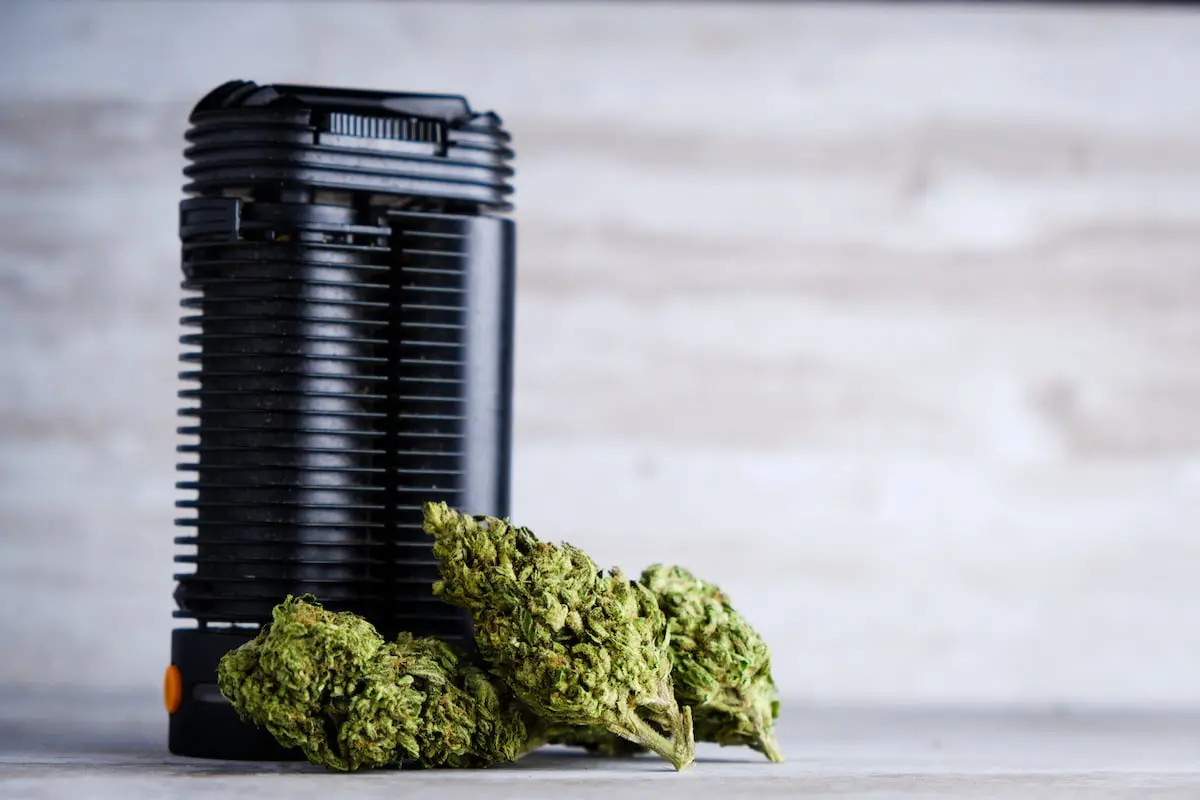
Patients prescribed medical cannabis flower in the UK cannot legally smoke it, so it is instead inhaled using a vaporiser. But how do cannabis vaporisers actually work, what are the different types, and what do patients need to know before using one?
How do medical cannabis vaporisers work?
A medical cannabis vaporiser heats the cannabis flower without burning it, releasing cannabinoids such as THC and CBD into a vapour which can then be inhaled.
This distinction between vaporising and smoking is important. Smoking involves combustion, which produces smoke and exposes the lungs to harmful by-products.
Vaporisers instead heat cannabis to temperatures intended to release its active compounds without setting the plant material alight.
Clinical practice guidelines for the management of chronic pain and co-occurring conditions, published in Cannabis and Cannabinoid Research, favour vaporising dried cannabis flower over smoking it because it avoids some of the potential risks of combustion and exposure to second-hand smoke.
The authors said adverse effects associated with combustion made smoked cannabis “less favorable”, while inhaled cannabis can offer a “rapid onset and shorter duration of action”.
However, they also noted that oral oils and capsules can provide more consistent dosing and avoid potential adverse effects associated with inhalation.
Why do UK patients vaporise medical cannabis?
Cannabis-based medicines became available on prescription in the UK in November 2018, but smoking prescribed cannabis remains illegal because of the health risks associated with smoking.
Patients prescribed dried cannabis flower for inhalation should use it as directed by their clinician and follow the instructions for their particular vaporiser.
NICE says patients should be told how to take their medicine, as well as its potential benefits and harms, possible interactions and effects on driving. It also recommends ongoing monitoring of effectiveness and adverse effects.
Dry-herb vaporisers, cartridges and inhalers
Not every device described as a cannabis “vape” works in the same way, and some of the terminology can be confusing.
| Device | What it uses | How it works | UK medical context |
|---|---|---|---|
| Dry-herb vaporiser | Prescribed dried cannabis flower | Heats flower without burning it | Used to inhale prescribed cannabis flower |
| Metered-dose inhaler | A cannabis-based medicine made for inhalation | Delivers a measured amount with each inhalation | Designed to give a consistent dose |
| Consumer CBD/e-cigarette vape | CBD or other vape liquid | Heats a liquid to produce vapour | Not the same as a prescribed cannabis inhalation device |
As Cannabis Health reported last year, Curaleaf launched the UK’s first CE-certified liquid inhaler for cannabis-based medicines.
Unlike a dry-herb vaporiser, which heats cannabis flower, the handheld device uses cartridges containing liquid cannabis extract. It activates when the patient inhales and is designed to deliver a consistent amount of medicine each time.
Curaleaf’s UK managing director Jonathan Hodgson said the device allowed inhaled cannabis to be given with “controlled precision”, with a standardised amount delivered with each use.
Using a dry-herb vaporiser
The exact process varies between devices, so patients should always follow the instructions supplied with their vaporiser and the directions on their prescription.
In general, using prescribed flower involves preparing the amount directed by the prescriber, placing it in the device’s chamber, selecting the appropriate temperature and allowing the vaporiser to reach that temperature before inhaling.
NICE recommends that the effectiveness and safety of cannabis-based medicines are monitored and doses adjusted under the direction of the initiating specialist prescriber.
Cannabis Health’s previous guide to using a vaporiser also covers the mechanics of different devices, although patients using prescribed cannabis should always follow their current clinical and manufacturer instructions.
Temperature and dosing
Temperature can affect how much THC and other cannabinoids are delivered when cannabis is vaporised.
A 2025 review by Caroline MacCallum, Lindsay Lo and Michael Boivin, published in Cannabis and Cannabinoid Research, examined existing research alongside expert clinical opinion on the safe use of cannabis vaporisers.
The authors said dosing through inhalation can be “challenging”, as the amount delivered can vary depending on factors including the cannabis product, chamber size, temperature and inhalation technique.
They recommend starting at around 180–200°C, although the appropriate temperature will depend on the individual patient. If vapour causes respiratory irritation, they suggest reducing the temperature to around 160–180°C or considering an oral formulation instead.
Patients should follow the instructions for their prescribed product and vaporiser and discuss any changes to their dose with their prescribing team.
Is vaporising safer than smoking?
Vaporising cannabis avoids combustion and consuming the toxins that are produced when cannabis is burned, but inhaling it is not risk-free.
As Cannabis Health reported in 2023, researchers at the US National Center for Toxicological Research tested whether vaporising cannabis flower reduced the levels of bacteria and fungi present in it.
Using a commercial vaporiser, they heated cannabis at 190°C for 70 seconds and found this did not significantly reduce the number of microorganisms present.
Cannabis scientist Dr Callie Seaman told Cannabis Health this was “mostly a concern” for people with pulmonary problems or weakened immune systems, who may be more vulnerable to infection.
Professor Mike Barnes, then president of the Medical Cannabis Clinicians Society, said studies had shown vaporising cannabis to be “safer than smoking”, but stressed that “there are always going to be risks” with any medication.
Research on the long-term effects is still limited. The 2025 review discussed above was based on existing research and expert clinical opinion rather than new clinical trial data. The authors said vaporisation could help reduce smoked cannabis use, but recommended assessing the risks and benefits for each patient and monitoring for side effects.
Liquid cannabis and CBD vapes raise different safety questions. As Cannabis Health previously reported, some vape liquids contain substances such as propylene glycol, vegetable glycerin or MCT oil, which can produce potentially harmful compounds when heated. However, much of the research comes from e-cigarettes and should not be treated as evidence about prescribed dried cannabis flower.
Cleaning and maintaining a vaporiser
Cannabis residue can build up inside a vaporiser over time, reducing airflow and affecting how well the device works.
As Cannabis Health’s previous cleaning guide explains, chambers and other parts that collect residue should be cleaned regularly. However, the right method depends on the device. Some cleaning products, including alcohol and acetone, can damage plastic components.
Patients should therefore follow the manufacturer’s instructions for their vaporiser, particularly when using cleaning solutions. Any cleaning product should be completely removed before the device is used again
What UK patients need to know
Medical cannabis should be taken as prescribed, including when it is administered through a vaporiser.
Under NICE guidance, the initial prescription of most cannabis-based medicinal products must be made by a doctor on the Specialist Register who has a special interest in the condition being treated.
Before treatment begins, patients should be given information about the potential benefits and harms, possible interactions with other medicines, how long treatment may last and how to take their medicine. NICE also recommends monitoring its effectiveness and any adverse effects.
Patients experiencing side effects or problems using their vaporiser should speak to their prescribing team.
Medical Cannabis Vaporiser FAQs
Can You Smoke Prescribed Medical Cannabis in the UK?
No. UK regulations specifically prohibit administering cannabis-based medicinal products by smoking. The government retained the restriction when medical cannabis was rescheduled in 2018 because of the known harms associated with smoking.
What Is the Difference Between Vaping and Vaporising Medical Cannabis?
The terms are often used interchangeably, but they can describe quite different products. A dry-herb medical vaporiser heats cannabis flower without burning it. Vape pens and cartridges generally heat a liquid or extract. Patients should only use the formulation and administration method specified for their prescribed medicine.
Can You Put Medical Cannabis Oil in a Vaporiser?
Not unless that particular medicine has been formulated and prescribed for inhalation using a compatible device. Oral or sublingual cannabis oils are designed to be swallowed or taken under the tongue and should not be transferred into a vaporiser.
What Temperature Should a Medical Cannabis Vaporiser Be Set At?
There is no single temperature suitable for every prescribed product or device. Temperature influences the compounds released and the amount delivered, while performance can vary between vaporisers. Patients should follow the instructions for their particular device and medicine rather than relying on a universal setting.
How Often Should You Clean a Medical Cannabis Vaporiser?
It depends on the device and how frequently it is used. Residue should not be allowed to build up to the point that it interferes with airflow or performance. Follow the manufacturer’s cleaning and maintenance schedule, as cleaning products suitable for one vaporiser may damage another.
Is Vaporising Medical Cannabis Safe for Your Lungs?
It avoids the smoke produced by combustion, but there is not enough long-term evidence to describe cannabis vaporisation as risk-free. Research into therapeutic vaporisation is still developing, and patients with respiratory conditions or other risk factors should discuss the most appropriate route of administration with their clinician.
Medical Cannabis Prescribing at London
The wider clinical and regulatory issues around cannabis-based medicines will be examined at the Cannabis Health Symposium London on 26 November.
The programme will cover prescribing and patient access, regulation of unlicensed cannabis-based medicines, clinical evidence and developments in new dosage forms and product categories.
Secure Your Place
The Cannabis Health Symposium London takes place at Conway Hall on 26 November 2026, bringing together healthcare professionals, industry and patient advocates for a full day of evidence-led education on medical cannabis.
Find out more and book tickets for the Cannabis Health Symposium London.
Get the weekly briefing
A round-up of the latest science, regulation and developments across the UK and Europe — in your inbox every week.